
Glass Pool Fences in Florida: Safety Law, Code Requirements and 2026 Cost
The Florida pool barrier rules in plain English, how a frameless glass fence meets them, the hardware that survives salt and wind, and what it costs in 2026.
Key takeaways
- Florida law (Statute 515.27) requires every new residential pool to have at least one safety feature: a compliant barrier, an approved safety cover, or exit alarms on all doors and windows that open to the pool.
- A compliant barrier must be at least 48 inches high, have no more than 2 inches of clearance at the bottom, and no opening that lets a 4-inch sphere pass through.
- Gates must open outward, away from the pool, and be self-closing and self-latching, with the latch release at least 54 inches from the bottom or protected on the pool side.
- Frameless glass fences meet these rules with 1/2" tempered glass on stainless spigots; near the coast or on saltwater pools, use 2205 duplex or 316 stainless hardware.
- Installed glass pool fencing runs about $200–$500 per linear foot in 2026, plus $800–$2,500 for a self-closing glass gate. Permits and HVHZ wind requirements apply in Miami-Dade and Broward.
Please note: This article summarizes Florida Statutes Chapter 515 and the Florida Building Code, Residential, 8th Edition (2023), Section R4501.17, for general education. It is not legal advice. Your local building department has the final word on your project.
On this page
Florida has more residential pools than almost any state — and, tragically, it has led the nation in drowning deaths among children ages one to four. That is why the state requires a safety feature on every new pool, and why the pool barrier rules are so specific. A frameless glass pool fence is the one option that protects children without hiding the pool or the view. This guide explains the law, how glass meets it, what hardware survives salt air and hurricanes, and what you can expect to pay.
48"
Minimum barrier height, measured on the outside
4"
Largest sphere that may pass through any opening
54"
Minimum height of a gate latch release from the bottom
The Florida law: one safety feature is mandatory
The Residential Swimming Pool Safety Act (Florida Statutes Chapter 515) applies to any residential pool, spa or hot tub with water more than 24 inches deep. Section 515.27 says a new pool cannot pass final inspection unless it has at least one of these:
- 1A barrier around the pool that isolates it from the home and meets the requirements of Section 515.29 — this is where a glass fence comes in.
- 2An approved safety pool cover.
- 3Exit alarms on every door and window that gives direct access from the house to the pool, sounding at least 85 dBA at 10 feet.
It is a criminal offense to skip it
Failing to equip a new pool with at least one safety feature is a second-degree misdemeanor under Florida law. Many insurers and inspectors also treat a compliant barrier as the preferred option, because it protects children even when a door is left open.
Barrier requirements a glass fence must meet
Statute 515.29 sets the principles; the Florida Building Code, Residential, Section R4501.17 gives the measurements inspectors check. Together they require:
| Requirement | Rule | How a frameless glass fence complies |
|---|---|---|
| Height | At least 48" above grade, measured on the side facing away from the pool | Standard panels are 48" (1200 mm) tall; taller available |
| Bottom clearance | No more than 2" between grade and the bottom of the barrier | Panels set on spigots ~1" to 2" above a level deck |
| Openings | No opening may allow a 4" sphere to pass | Gaps between panels are kept under 4" (typically 3/4" to 1") |
| Climbability | No horizontal members, protrusions or nearby objects a child could climb | A flat glass face has nothing to climb; keep furniture and planters away |
| Gate direction | Must open outward, away from the pool | Glass gate hung on soft-close hydraulic hinges set to swing outward |
| Gate closing | Self-closing and self-latching | Hydraulic hinges plus a magnetic safety latch |
| Latch height | Release at least 54" from the bottom, or on the pool side out of a child’s reach; no opening over 1/2" within 18" of the release | Latch mounted at the top edge of a 48" gate meets the pool-side rule |
| Separation from home | Doors from the house opening into the pool area need self-closing, self-latching devices at least 54" above the threshold, or alarms | Fence is usually run so the house is outside the barrier |
Glass and hardware that survive South Florida
A pool fence lives in the harshest environment on your property: sun, chlorine or salt, wind and sprinklers. The specification matters as much as the design.
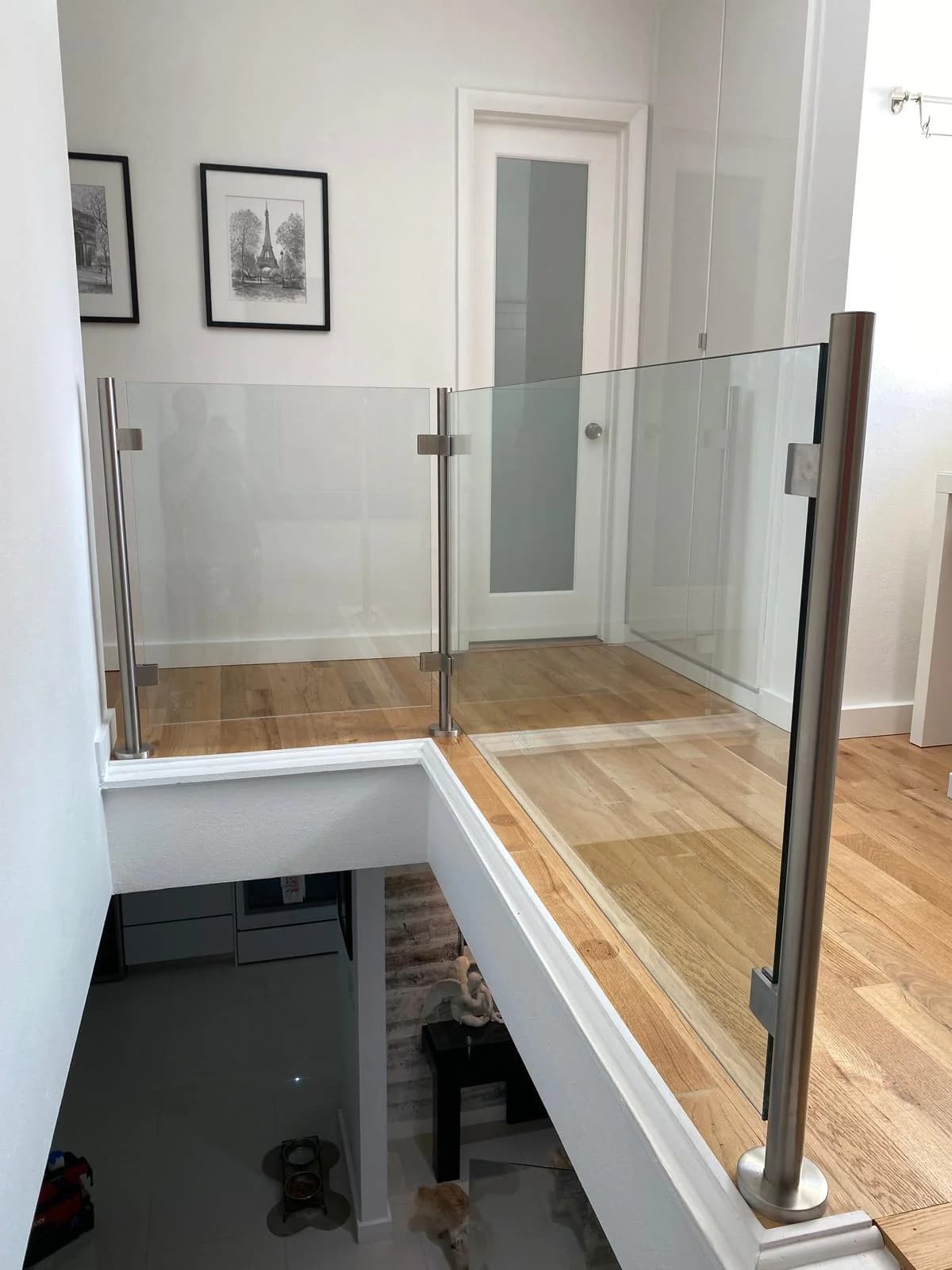
- Glass: 1/2" (12 mm) fully tempered safety glass is the standard for frameless pool fencing. Panels are polished on all edges and carry a permanent safety-glazing label. Laminated glass is an option where the fence also serves as a guard with a drop on the other side.
- Spigots and posts: Panels are held by stainless spigots either core-drilled into the concrete deck (cleanest look) or base-plated and bolted down (for pavers or where drilling is not possible). Mini posts or clamp systems are used on wood decks.
- Stainless grade: 316 marine-grade stainless is the minimum near the coast. For saltwater pools and oceanfront homes, 2205 duplex stainless resists pitting and the brown “tea staining” that 316 can develop. Avoid 304 outdoors in Florida.
- Gates: Glass gates use hydraulic soft-close hinges that are adjustable so the gate always latches, plus a magnetic latch that locks from the pool side. Both are available in 316 or 2205.
- Hurricane zone: Miami-Dade and Broward are in the High-Velocity Hurricane Zone. Exterior glass fences may require a product approval or engineering to show the glass and spigots resist the design wind load. Ask for this before you sign.
Maintenance that keeps the warranty
Rinse the glass and hardware with fresh water every one to two weeks (weekly on the beach), wipe stainless with a mild detergent and a soft cloth, and never use chlorine-based cleaners on the metal. A protective coating on the glass makes salt and sprinkler spots wipe off instead of etching in.
What a glass pool fence costs in 2026
| Item | Typical 2026 range | Notes |
|---|---|---|
| Frameless glass fence, installed | $200 – $500 per linear foot | 1/2" tempered glass on stainless spigots |
| Self-closing glass gate | $800 – $2,500 each | Hydraulic hinges and magnetic latch included |
| 2205 duplex hardware upgrade | +10–20% | Recommended for saltwater pools and oceanfront |
| Exterior / coastal premium | +10–20% | Weather-rated hardware, site access |
| Permit | $100 – $500 | Required in most South Florida municipalities |
| Engineering / product approval (HVHZ) | Varies | When required by the building department |
Glass costs more up front than aluminum pickets or mesh, but it needs no painting, cannot be climbed, does not block the view or the breeze, and is the only barrier type that most homeowners consider an upgrade to the backyard rather than a compromise. Our South Florida glass railing cost guide breaks down how hardware, glass type and access change the number.
Frameless vs. semi-frameless pool fencing
Semi-frameless (posts)
- Glass panels between slim aluminum or stainless posts
- Lower cost, faster installation
- Works on uneven ground and pavers
- Posts interrupt the view slightly
Frameless (spigots)
- Panels held only at the base — nothing above deck level
- Completely uninterrupted view of the pool
- Requires a solid, level concrete deck or footing
- Premium look and premium price
Permits and inspections in South Florida
A new or replacement pool barrier requires a building permit in Miami-Dade, Broward and Palm Beach counties, and the barrier is inspected before the pool is approved for use. The inspector will measure the height, bottom clearance, panel gaps and gate operation, and may ask for the glass safety label and the hardware’s product approval. Our team handles the permit paperwork and schedules the inspection as part of the job.
Before you approve a glass pool fence quote
- Glass: 1/2" tempered with a permanent safety-glazing label
- Panel height 48" minimum, bottom gap 2" maximum, panel gaps under 4"
- Stainless grade stated in writing: 316 minimum, 2205 for saltwater or oceanfront
- Gate: outward-swinging, self-closing hydraulic hinges, self-latching lock at the correct height
- HVHZ product approval or engineering included where required
- Permit, inspection and warranty terms spelled out
For balconies, stairs and other guards, the rules are different — heights, laminated glass and loads are covered in our guide to Florida glass railing code requirements.
Frequently asked questions
Yes, when it is designed to the code: at least 48 inches high on the outside, no more than 2 inches of clearance at the bottom, no gaps a 4-inch sphere can pass through, and a self-closing, self-latching gate that opens outward with its release at least 54 inches from the bottom or protected on the pool side. The Florida Building Code, Residential, Section R4501.17 and Florida Statute 515.29 set these rules.
Sources & references
- [1]Section 515.27 – Residential swimming pool safety feature options; penalties — The Florida Senate
- [2]Section 515.29 – Residential swimming pool barrier requirements — The Florida Senate
- [3]Pool Barriers – Florida Building Code, Residential R4501.17 (presentation) — Miami-Dade County Department of Regulatory and Economic Resources
- [4]Florida Building Code, Residential (2023) – Chapter 45 Private Swimming Pools — International Code Council
- [5]Drowning Prevention — Florida Department of Health
- [6]Drowning Statistics (children ages 1–4) — Florida Department of Health in Miami-Dade County
- [7]How Much Does a Glass Railing Cost? 2026 Price Breakdown (pool fencing and gates) — Berwyn Shower & Glass
- [8]2205 Duplex Stainless Steel for Coastal and Pool Glass Fencing — Architecture & Design
Protect the pool without hiding it
We design frameless glass pool fences to Florida’s barrier code, with marine-grade hardware, self-closing gates and the permit handled for you — in Miami-Dade, Broward and Palm Beach.
- 1/2" tempered safety glass
- 316 & 2205 stainless hardware
- Permit and inspection included
Free estimates · We respond within 24 hours
Keep reading
All articles →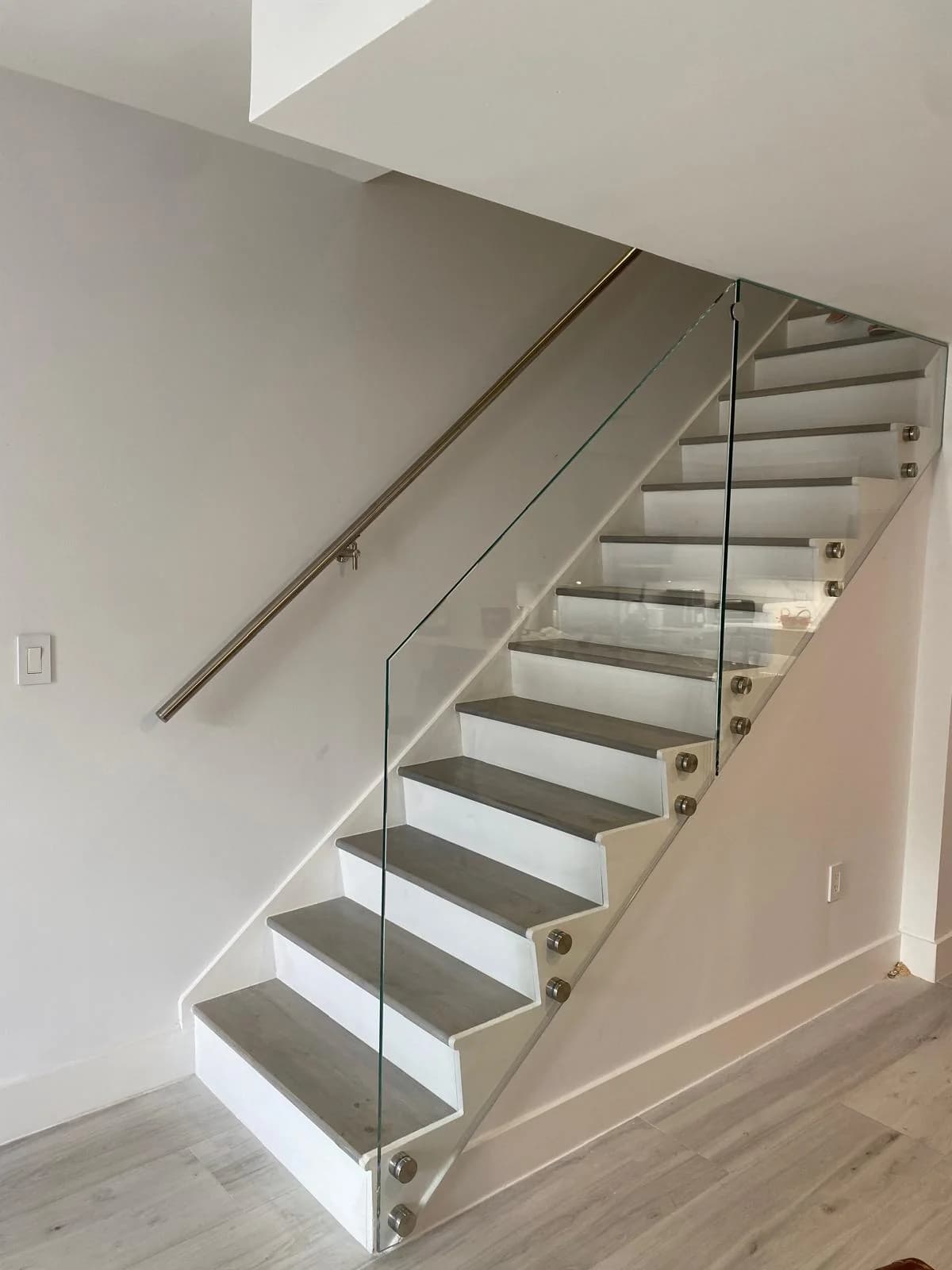
Glass Railing Cost in South Florida (2026): Stairs, Balconies and Pool Fences
2026 price ranges per linear foot by system type, what a typical staircase or balcony costs, why laminated glass and outdoor hardware cost more here, and how to compare quotes.
Read article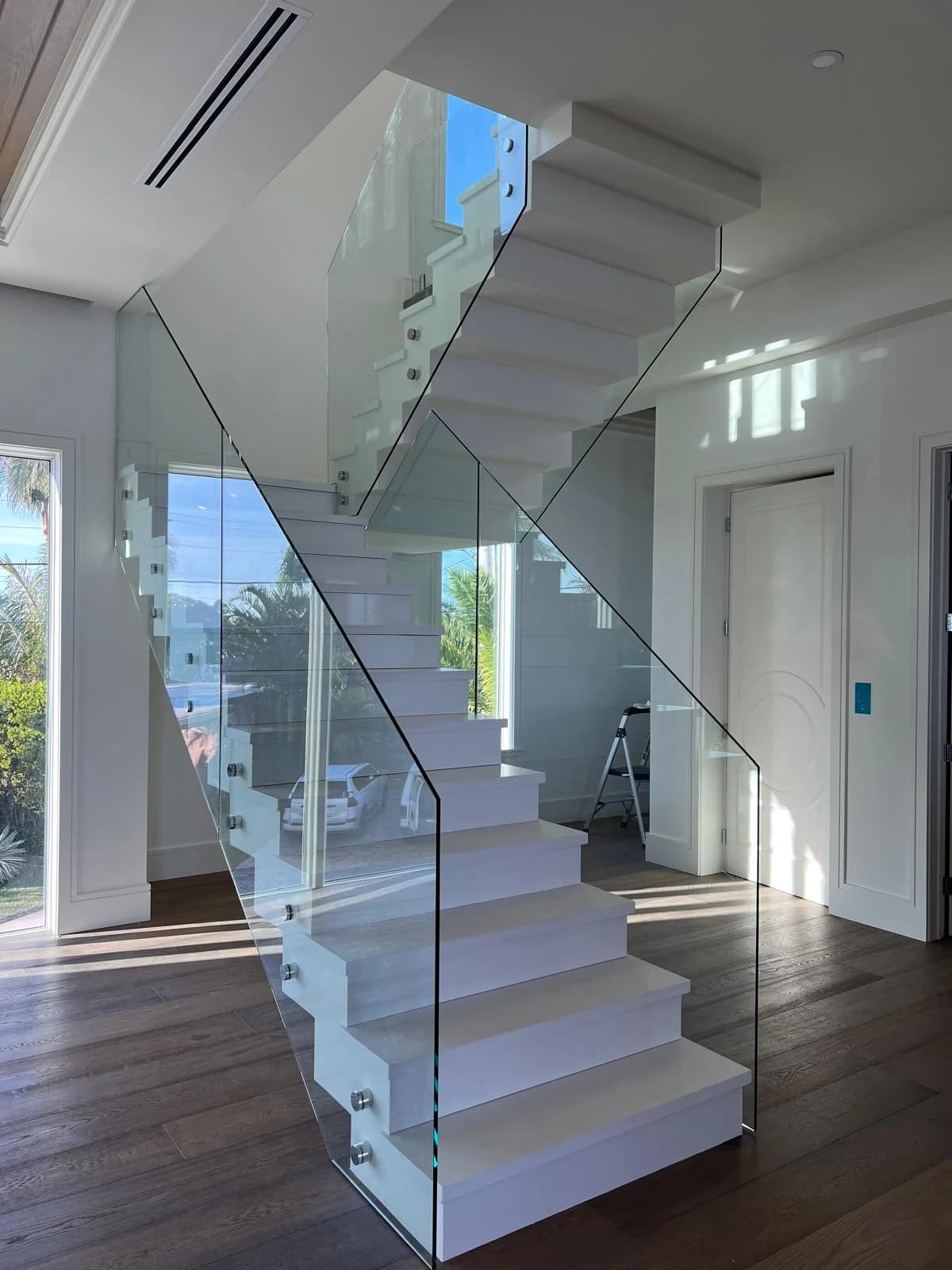
Glass Railings in Florida: Building Code Requirements Homeowners Should Know
Guard heights, the 4-inch rule, tempered vs. laminated glass, hurricane zones and permits — the Florida code essentials in plain English.
Read article
Shower Door Glass Options: Clear vs. Low-Iron vs. Frosted vs. Fluted (and What Florida Code Requires)
Privacy, light, cleaning and cost for every shower glass type, the one upgrade that makes white bathrooms pop, and the Florida safety-glazing rule your enclosure must follow.
Read article