
Shower Door Glass Options: Clear vs. Low-Iron vs. Frosted vs. Fluted (and What Florida Code Requires)
Privacy, light, cleaning and cost for every shower glass type, the one upgrade that makes white bathrooms pop, and the Florida safety-glazing rule your enclosure must follow.
Key takeaways
- Clear 3/8" tempered glass is the standard for frameless showers; it has a faint green edge tint that shows most against white tile.
- Low-iron (ultra-clear) glass cuts iron content to about 0.01% and removes the green cast. It typically adds 10–30% to the glass cost and is worth it in white or marble bathrooms.
- Frosted glass gives the most privacy; fluted and rain glass give moderate privacy with more style and light.
- Textured glass hides water spots better but is harder to clean. Ask for the smooth side facing the shower.
- Florida’s Residential Code treats glass within 60 inches above a tub or shower floor as a hazardous location: it must be safety glazing (tempered or laminated) with a permanent label.
Please note: Code references summarize the Florida Building Code, Residential, 8th Edition (2023), which is based on the International Residential Code. They are provided for general education and are not a substitute for your local building department’s requirements.
On this page
- 01All shower glass options at a glance
- 02Clear tempered glass: the default for a reason
- 03Low-iron glass: when the green tint matters
- 04Frosted glass: the privacy option
- 05Fluted and reeded glass: the design trend
- 06Bronze and gray tinted glass
- 07What Florida code requires of shower glass
- 08Thickness, coatings and finish: the other choices
- 09How to decide in two minutes
- 10Frequently asked questions
Most people spend weeks choosing tile and about five minutes choosing shower glass — and then wonder why the enclosure looks slightly green, or shows every water spot, or does not give the privacy they expected. The glass itself is one of the biggest decisions in the project. This guide compares every option we install, explains what Florida’s code requires of any shower glass, and gives you a simple way to decide.
3/8"
Standard thickness for frameless shower glass
~0.01%
Iron content of low-iron glass (vs. ~0.1% in clear)
60"
Height above the shower floor where safety glazing is required
All shower glass options at a glance
| Glass type | Privacy | Light | Cleaning | Cost | Best for |
|---|---|---|---|---|---|
| Clear tempered | None | Maximum | Easiest to squeegee; spots are visible | Baseline | Most bathrooms, showcasing tile |
| Low-iron (ultra-clear) | None | Maximum, no color cast | Same as clear | +10–30% | White, marble and light bathrooms; listing photos |
| Frosted (acid-etched / satin) | High | Soft, diffused | Hides spots; smooth side in | Similar to clear at standard sizes | Shared baths, showers facing a door or bedroom |
| Fluted / reeded | Moderate | High | Grooves trap residue; needs care | Higher (specialty) | Design-forward ensuites |
| Rain / textured | Moderate to high | High | Hides marks; deep texture needs targeted cleaning | Higher | Privacy with a traditional look |
| Bronze or gray tint | Low | Tinted | Same as clear | Upgrade over clear | Warm (bronze) or cool (gray) palettes |
Clear tempered glass: the default for a reason
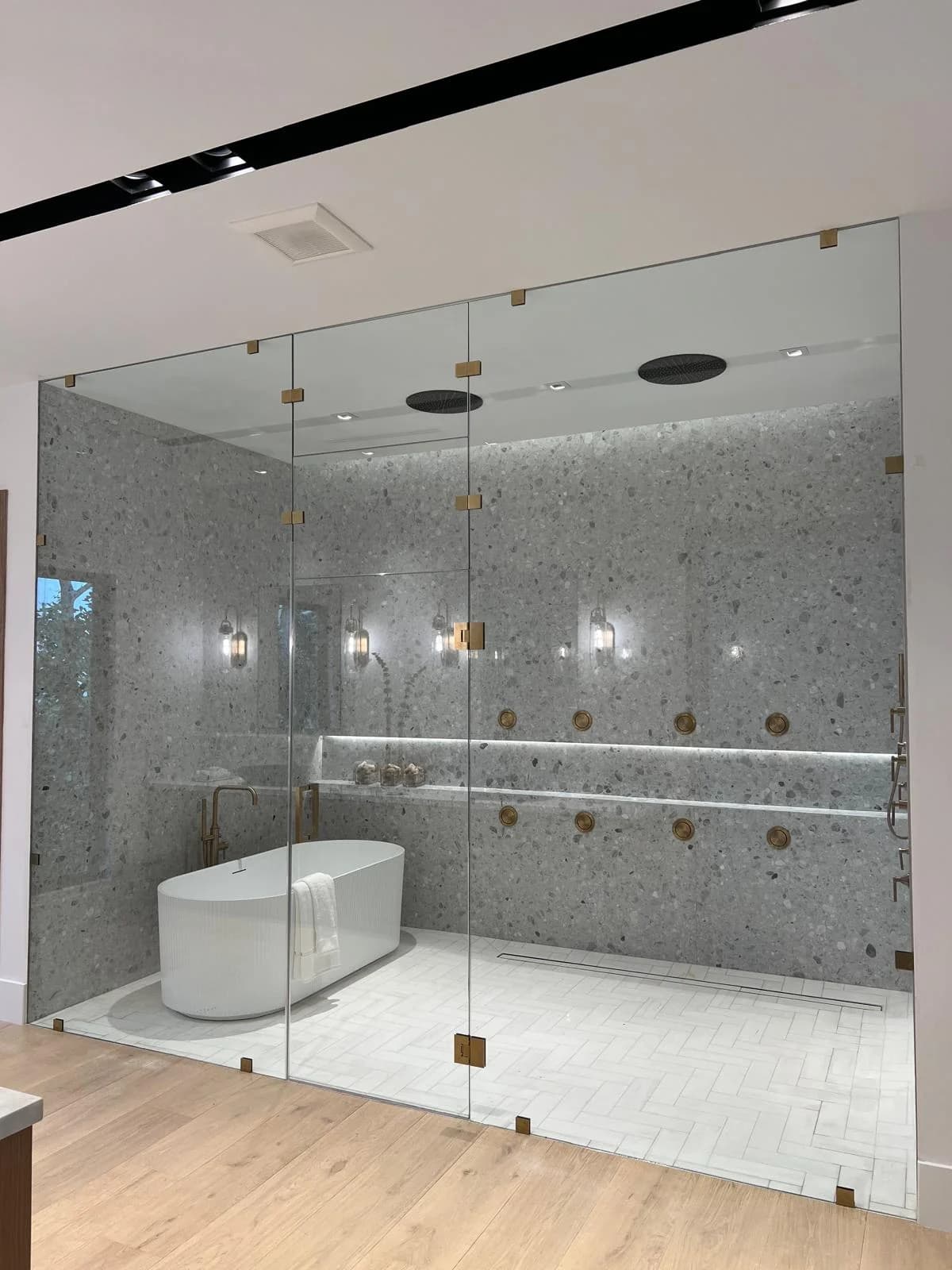
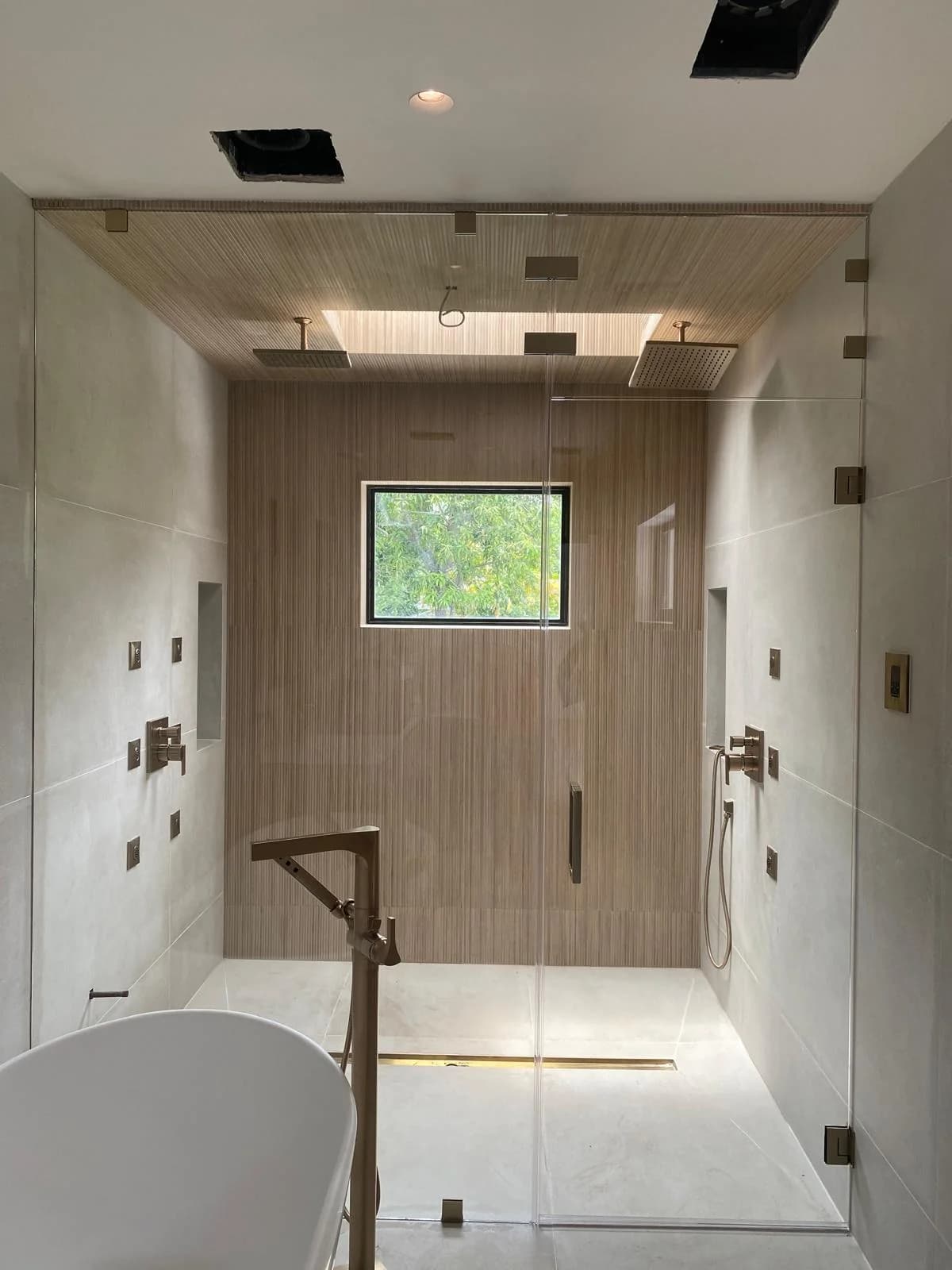
Standard clear glass is what most frameless showers use, usually in 3/8" thickness (1/2" for large or floor-to-ceiling panels). It shows your tile exactly, is the easiest to keep clean with a daily squeegee, and costs the least. Its one quirk: the iron in ordinary glass gives it a faint green tint, most visible along the edges and in thicker panels. Against beige, gray or warm-toned tile you will rarely notice it. Against bright white tile or marble, you might.
Low-iron glass: when the green tint matters
Low-iron glass (sold under names like Starphire, UltraClear, Optiwhite or “HD glass”) is made with higher-purity silica so the iron content drops from roughly 0.1% to 0.01% or less. The result is water-clear glass with no green edge. Published estimates put the premium at 10–30% on the glass, and some manufacturers quote more — on a typical enclosure it is a few hundred dollars, not thousands.
Our rule of thumb
If the bathroom is white, marble, or built around a carefully chosen tile color, or if the home will be photographed for sale or rental, choose low-iron. If the tile is beige, gray, or dark, standard clear usually looks identical and saves money.
Frosted glass: the privacy option
“Frosted” covers several processes — acid-etched (satin), sandblasted, and frosted film applied to clear glass. All diffuse the view so only a silhouette shows up close. For wet areas, acid-etched or satin glass is the better choice because its smoother surface holds fewer fingerprints and mineral spots than sandblasting, and we install it with the smooth side facing the shower so the surface that gets wet is the easy one to clean. Popular variations:
- Fully frosted — maximum privacy, soft glow, good for showers next to a bedroom or a shared family bath.
- Privacy band — a frosted strip at body height (roughly 2 to 5 feet) with clear glass above and below, so light and the ceiling line stay open.
- Frosted film — a retrofit for existing clear glass. Less durable than etched glass but inexpensive and reversible.
Fluted and reeded glass: the design trend
Fluted (ribbed) glass is the fastest-growing request we get. Vertical ribs blur faces and details while letting almost all the light through, and the lines visually stretch the shower’s height. Two honest caveats: a brightly lit person standing close to the glass can still produce a recognizable silhouette, so it is moderate privacy, not full privacy; and the grooves can trap soap residue and leave vertical streaks with South Florida’s hard water. We recommend fluted glass for primary ensuites where style matters more than concealment, with the ribbed face on the outside and a protective coating on the glass. See our guide on how to keep shower glass spotless.
Fluted / reeded
- Moderate privacy, maximum light
- Strong architectural look
- Grooves need regular cleaning
- Specialty glass, higher cost
Rain / textured
- Stronger privacy than fluted
- Random texture hides water marks well
- Deep texture needs targeted cleaning
- More traditional appearance
Frosted / satin
- Highest privacy of the three
- Soft, even glow instead of a view
- Easiest textured option to clean
- Often priced close to clear
Bronze and gray tinted glass
Tinted glass has color mixed into the glass body, not a coating, so it looks the same on both sides and cannot scratch off. Bronze warms the view and pairs with brass, oil-rubbed bronze and cream or wood tones; gray (smoke) cools it and pairs with chrome, brushed nickel and gray or white modern tile. Both reduce visibility slightly but offer little real privacy. They are an upgrade over clear and a strong choice when you want the enclosure itself to be a design element.
What Florida code requires of shower glass
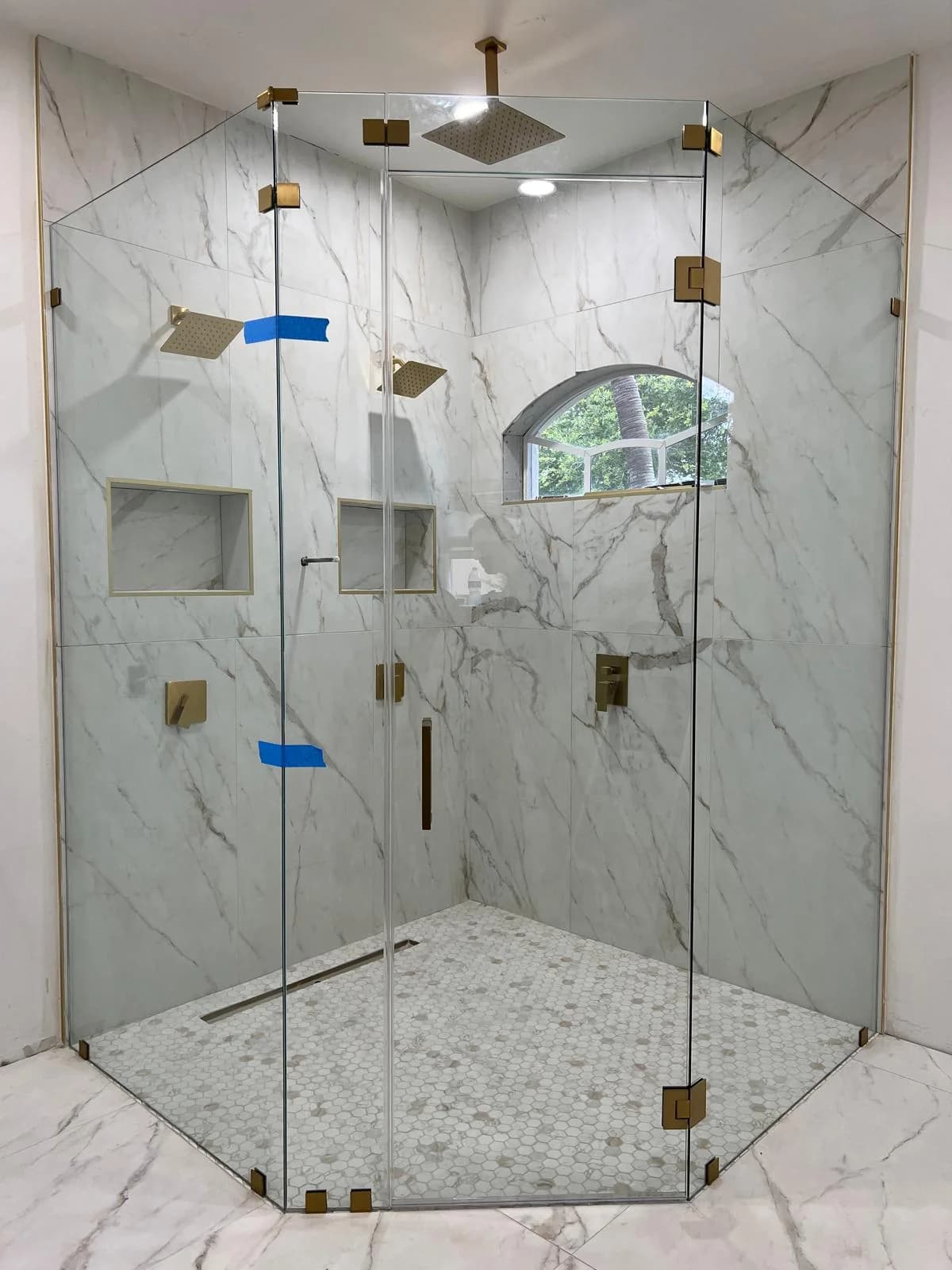
Whatever look you choose, the glass has to be safety glazing. The Florida Building Code, Residential (Section R308.4.5, “Glazing and wet surfaces”) lists glass in walls, enclosures or fences adjacent to bathtubs and showers as a hazardous location when the bottom edge of the glass is less than 60 inches above the standing or walking surface. In practice that means every panel of a shower enclosure must be:
- Tempered or laminated safety glass that meets the federal impact standard CPSC 16 CFR 1201 (Category II for doors) or ANSI Z97.1.
- Permanently labeled with the manufacturer’s mark showing the type of safety glazing. The label is usually a small etched logo in a corner — do not accept glass without it.
- Fabricated to final size before tempering. Tempered glass cannot be cut or drilled afterward, which is why an accurate on-site measurement after tile is finished is essential.
A permit question we get often
Replacing a shower door with a new one in the same opening is generally treated as a like-for-like replacement in most South Florida cities and does not require a permit, but rules vary by municipality and a full bathroom remodel does. Your contractor or our team can confirm with your local building department before work starts.
Thickness, coatings and finish: the other choices
- 3/8" vs. 1/2". 3/8" is the industry standard for frameless doors. 1/2" looks more substantial and reduces flex on tall or wide fixed panels, but weighs more and needs heavier hinges and solid wall backing.
- Protective coating. A factory or professionally applied hydrophobic coating makes water sheet off and matters even more on textured glass. It costs a small fraction of the project.
- Hardware finish. Chrome and brushed nickel suit clear and gray glass; brass and matte black pair beautifully with low-iron, bronze and fluted glass. Compare samples in your bathroom light, not in a showroom.
How to decide in two minutes
Ask yourself
- Is the bathroom white or marble? → Low-iron.
- Does the shower face a door, hallway or bedroom? → Frosted, or a privacy band.
- Do you want a design statement and accept moderate privacy? → Fluted or rain.
- Warm fixtures and tile? → Consider bronze. Cool palette? → Consider gray.
- None of the above? → Clear 3/8" with good hardware and a coating is the right answer most of the time.
Still deciding between a door that slides or swings? Our comparison of sliding vs. hinged shower doors covers space, cleaning and code, and the Miami shower door cost guide shows how each glass choice affects the price.
Frequently asked questions
It is worth it when the bathroom is white, marble, or built around a specific tile color, because standard clear glass adds a faint green tint at the edges that is visible against light surfaces. With beige, gray or dark tile the difference is hard to see. Low-iron typically adds about 10–30% to the glass cost.
Sources & references
- [1]Florida Building Code, Residential (2023) – R308.4.5 Glazing and wet surfaces — International Code Council
- [2]Florida Building Commission – Florida Building Code Online — Florida Department of Business and Professional Regulation
- [3]Safety Standard for Architectural Glazing Materials, 16 CFR Part 1201 — U.S. Consumer Product Safety Commission
- [4]Sliding Shower Door Glass Options: Clear, Low-Iron, Frosted, Bronze and Gray — Dulles Glass
- [5]Fluted Glass Shower Door: How It Compares with Clear, Frosted and Rain Glass — Horow
- [6]Low-Iron Glass Shower Door: Is It Worth It? — Horow
- [7]Acid Etched vs. Frosted Glass — Apex Tempered Glass
Not sure which glass to choose? We bring samples.
On our free measurement visit we bring clear, low-iron, frosted and fluted samples so you can compare them against your tile and lighting — then we fabricate code-compliant tempered glass to your exact opening.
- Clear, low-iron, frosted & fluted glass
- Labeled tempered safety glass
- Installed in 1–2 days
Free estimates · We respond within 24 hours
Keep reading
All articles →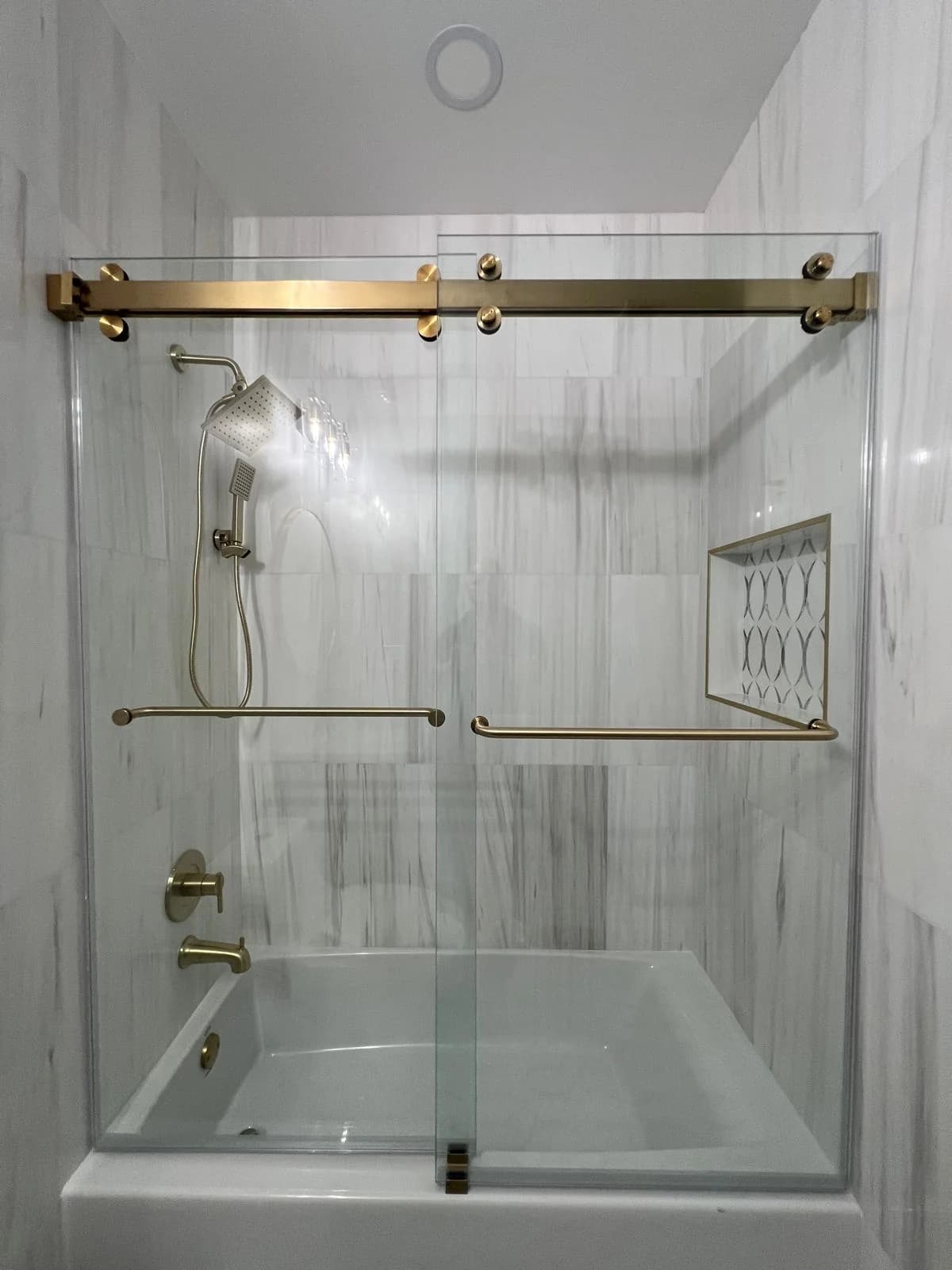
How to Clean Frameless Glass Shower Doors (and Stop Hard Water Spots for Good)
The 15-second habit that prevents most water spots, a safe weekly routine, the products that quietly ruin hardware finishes, and when a glass coating pays off.
Read article
Sliding vs. Hinged Shower Doors: Which One Is Right for Your Bathroom?
The honest comparison: which door fits a small bathroom, which is easier to clean, which leaks less, what each costs, and the code rule most people have never heard of.
Read article
Frameless Shower Door Cost in Miami (2026): What You’ll Actually Pay
Real 2026 price ranges for framed, semi-frameless and frameless shower doors — plus the 7 factors that move your quote up or down in South Florida.
Read article