
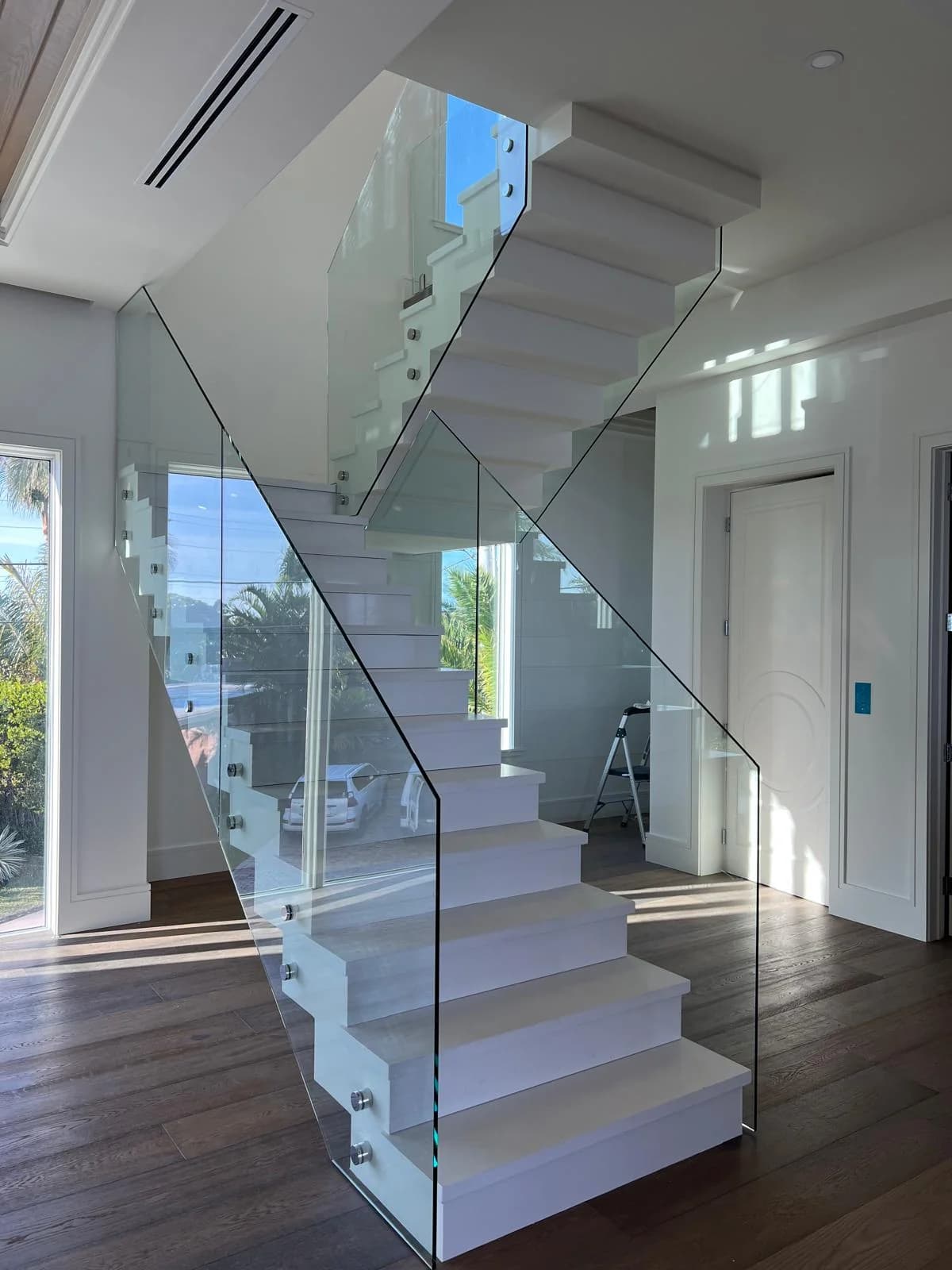
Glass Railings in Florida: Building Code Requirements Homeowners Should Know
Guard heights, the 4-inch rule, tempered vs. laminated glass, hurricane zones and permits — the Florida code essentials in plain English.
Key takeaways
- Guards are required where a walking surface is more than 30 inches above the floor or grade below.
- In homes, guards must be at least 36 inches tall (34 inches along open stairs); in commercial and multifamily buildings, generally 42 inches.
- Openings must not let a 4-inch sphere pass through — the rule that protects small children.
- Florida’s Building volume requires glass in guards to be laminated (made of tempered or heat-strengthened glass), with a narrow exception for single tempered glass.
- Miami-Dade and Broward are in the High-Velocity Hurricane Zone, where exterior products face stricter approval and testing.
Please note: This article summarizes the Florida Building Code, 8th Edition (2023) and the model codes it is based on, for general education. It is not legal or engineering advice. Requirements depend on your project and local jurisdiction — your permit and building department have the final word.
On this page
Glass railings are one of the most striking upgrades for a staircase, balcony or pool deck — nothing interrupts the view. But a railing is also a life-safety component, and Florida’s building code is specific about how it must perform. Here are the requirements every homeowner should understand before hiring an installer.
30"
Drop height that triggers a required guard
36" / 42"
Minimum guard height: homes / commercial
4"
Maximum sphere that may pass through openings
When is a railing (guard) required?
The code calls a protective railing a guard. Under the Florida Building Code, Residential, guards are required along open-sided walking surfaces — stairs, landings, balconies, porches and ramps — that are more than 30 inches above the floor or grade below, measured at any point within 36 inches horizontally of the open edge.
Key requirements at a glance
| Requirement | Homes (FBC Residential) | Commercial & multifamily (FBC Building) |
|---|---|---|
| Guard required when drop is | More than 30" | More than 30" |
| Minimum guard height | 36" | 42" (limited exceptions) |
| Guard height on open stairs | 34" (from tread nosings) | 42" (limited exceptions) |
| Opening limit | 4" sphere (4-3/8" on open stair sides) | 4" sphere (larger allowed above 36") |
| Handrail height | 34" – 38" | 34" – 38" |
| Glass in guards | Safety glazing; see structural glass baluster rules below | Laminated glass of tempered or heat-strengthened plies |
Tempered vs. laminated glass: what the code says
This is where many quotes differ — and where it matters most.
Tempered glass
- 4–5× stronger than ordinary annealed glass
- Breaks into small, blunt granules
- Once broken, the panel is gone — it no longer acts as a barrier
- Allowed as single glass only in limited situations
Laminated glass
- Two or more glass plies bonded with a strong interlayer
- If a ply breaks, fragments stay attached to the interlayer
- Panel can stay in place as a barrier after breakage
- Required by FBC Building 2407 for most glass guards
- FBC Building, Section 2407.1: glass used in a handrail, guardrail or guard must be laminated glass constructed of fully tempered or heat-strengthened glass, meeting CPSC 16 CFR 1201 Category II or ANSI Z97.1 Class A, with a minimum nominal thickness of 1/4". Single fully tempered glass is permitted only where there is no walking surface beneath or that surface is permanently protected from falling glass.
- Residential structural glass balusters (IRC R308.4.4.1): guards with structural glass baluster panels must have an attached top rail or handrail — unless the panels are laminated glass with two or more plies of equal thickness and the same glass type, tested to stay in place after breakage.
A red flag in any quote
If a quote for a frameless, top-rail-free glass railing specifies single tempered glass, ask how it meets the code. Frameless (cap-free) designs generally depend on properly specified laminated glass and a tested mounting system.
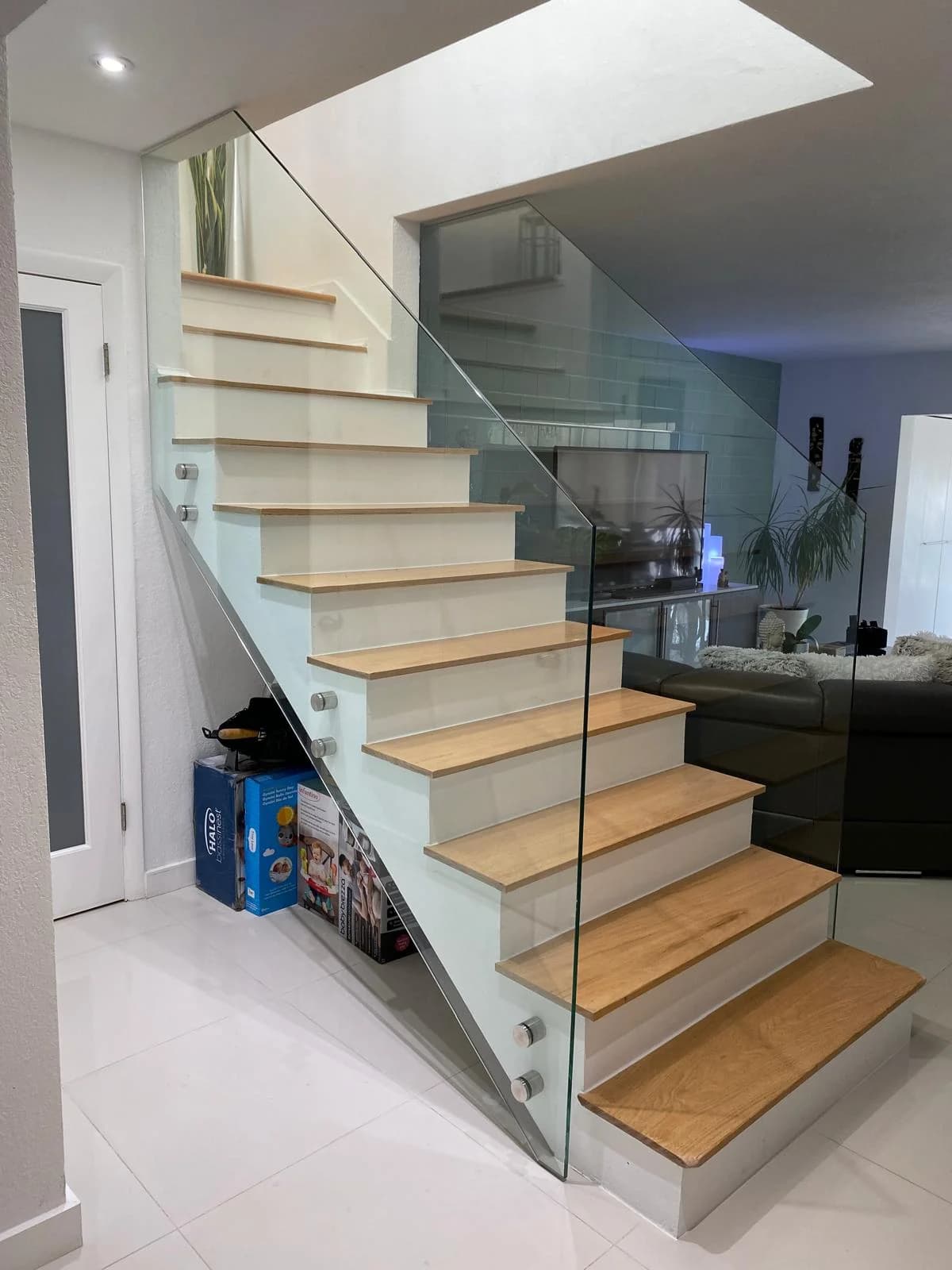
Strength: railings must resist real loads
Guards aren’t decorative panels — they must be designed to resist a 200-pound concentrated load applied in any direction at the top, and in-fill components must also resist specified loads. That’s why the glass thickness, the base shoe or standoff hardware, and what the hardware is anchored into all matter. A beautiful panel bolted into weak substrate is not a safe guard.
Outdoor railings and hurricane zones
Miami-Dade and Broward counties are part of Florida’s High-Velocity Hurricane Zone (HVHZ), which has the strictest wind requirements in the state. Exterior glass railings on balconies, terraces and pool decks may need Florida Product Approval or a Miami-Dade Notice of Acceptance (NOA) and/or signed-and-sealed engineering. Palm Beach County is outside the HVHZ but still has high design wind speeds.
- Use 316 stainless steel hardware outdoors and near the coast — it resists chloride corrosion better than 304.
- Confirm the system’s approval and wind rating before you commit to a design.
- For pools, Florida Statutes Chapter 515 requires residential pool barriers to be at least 4 feet high on the outside, without gaps a child could squeeze through — glass pool fences can meet this when properly designed.
Do you need a permit?
In South Florida, new or replacement guards and railings typically require a building permit, especially for stairs, balconies and exterior work. Requirements vary by city and county, so confirm with your local building department — a reputable installer will tell you up front whether a permit is needed for your project.
Before you hire a glass railing installer
- Is the company licensed and insured?
- Is the glass specified in writing as laminated or tempered — and why?
- Does the design include a top rail, or is it a tested cap-free system?
- What is the mounting system (base shoe, standoffs, spigots) and what is it anchored into?
- For outdoor work: is the system product-approved for your wind zone?
- Who pulls the permit and schedules inspections?
Frequently asked questions
Under the Florida Building Code, Residential, guards must be at least 36 inches high, and guards on the open sides of stairs at least 34 inches measured from the line connecting the tread nosings. Handrails are typically 34 to 38 inches high. Commercial and multifamily buildings generally require 42-inch guards.
Sources & references
- [1]2023 Florida Building Code, Building – Section 2407.1 Materials — International Code Council
- [2]2023 Florida Building Code, Residential – R312.1.2 Height — International Code Council
- [3]IRC R308.4.4.1 Structural glass baluster panels — International Code Council
- [4]Glass in Handrails and Guards – FBC 8th (2023) — Barfield Fence and Fabrication
- [5]Loads on Handrails and Guards – FBC 8th (2023) — Barfield Fence and Fabrication
- [6]Section 515.29 – Residential swimming pool barrier requirements — The Florida Senate
- [7]Florida Building Code (HVHZ overview) — Wikipedia
Planning a glass staircase or balcony railing?
We’ll visit your site, review heights and mounting conditions, and recommend a glass and hardware system that looks stunning and is built for safety.
- Laminated & tempered safety glass options
- Stainless steel hardware
- Miami-Dade, Broward & Palm Beach
Free estimates · We respond within 24 hours
Keep reading
All articles →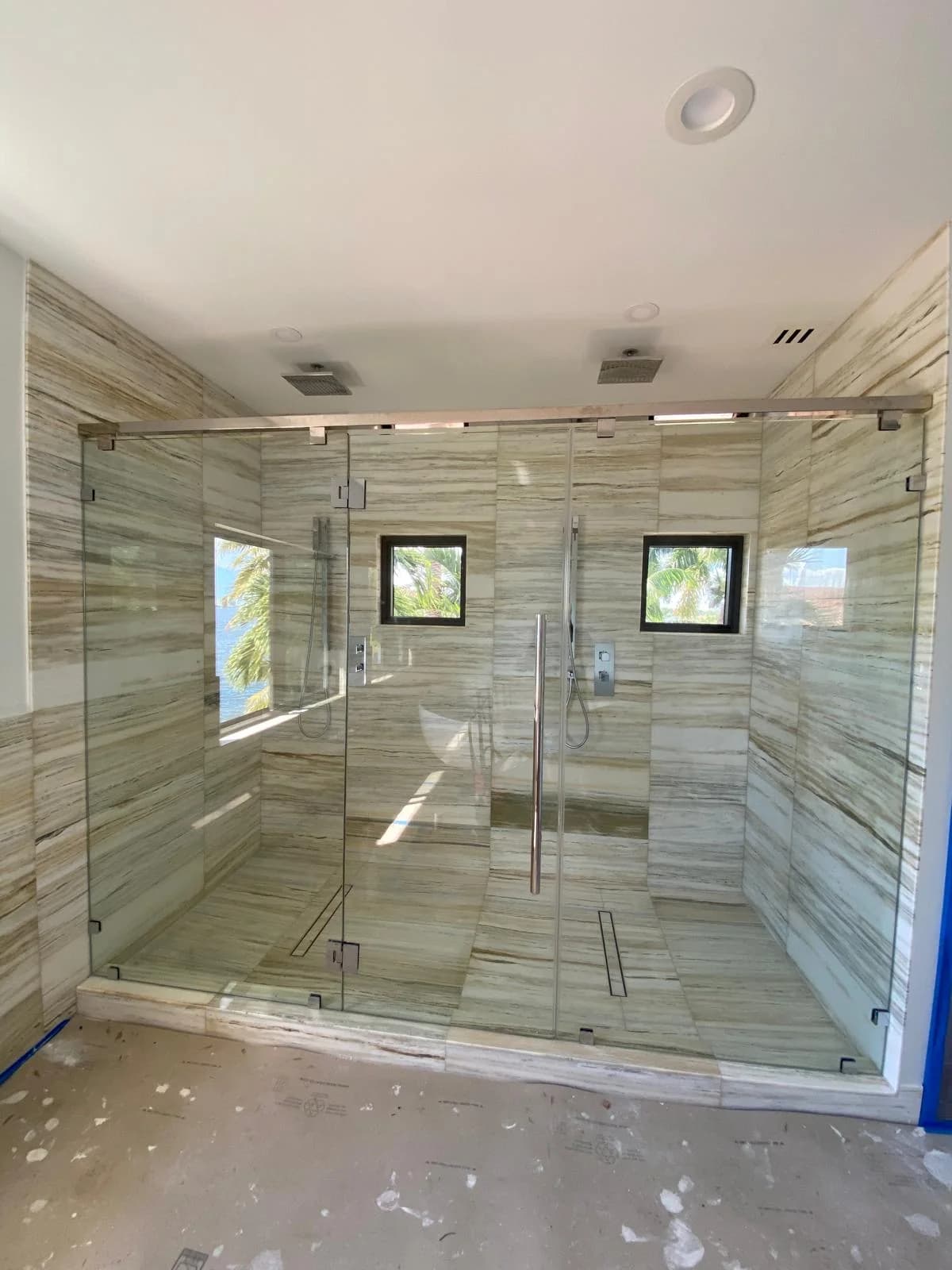
Frameless Shower Door Cost in Miami (2026): What You’ll Actually Pay
Real 2026 price ranges for framed, semi-frameless and frameless shower doors — plus the 7 factors that move your quote up or down in South Florida.
Read article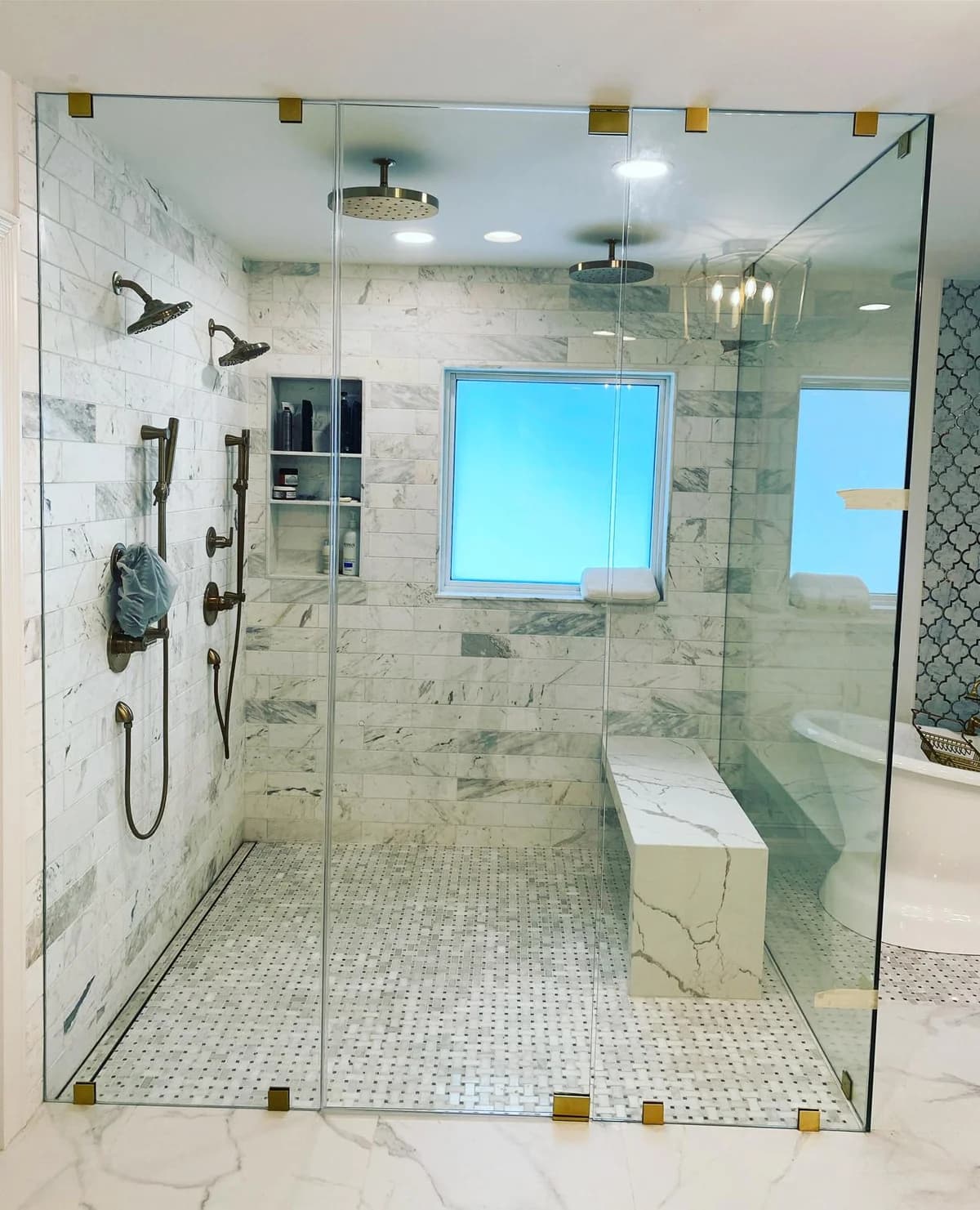
Frameless vs. Semi-Frameless Shower Doors: Which Is Right for Your Bathroom?
A side-by-side comparison of looks, glass thickness, weight, cleaning and cost — plus when 1/2" glass is actually worth it.
Read article
Glass Wine Cellars in South Florida: How to Keep Your Collection at 55°F
Ideal temperature and humidity, condensation in Florida’s climate, single vs. insulated glass, and how to keep light from damaging your wine.
Read article