
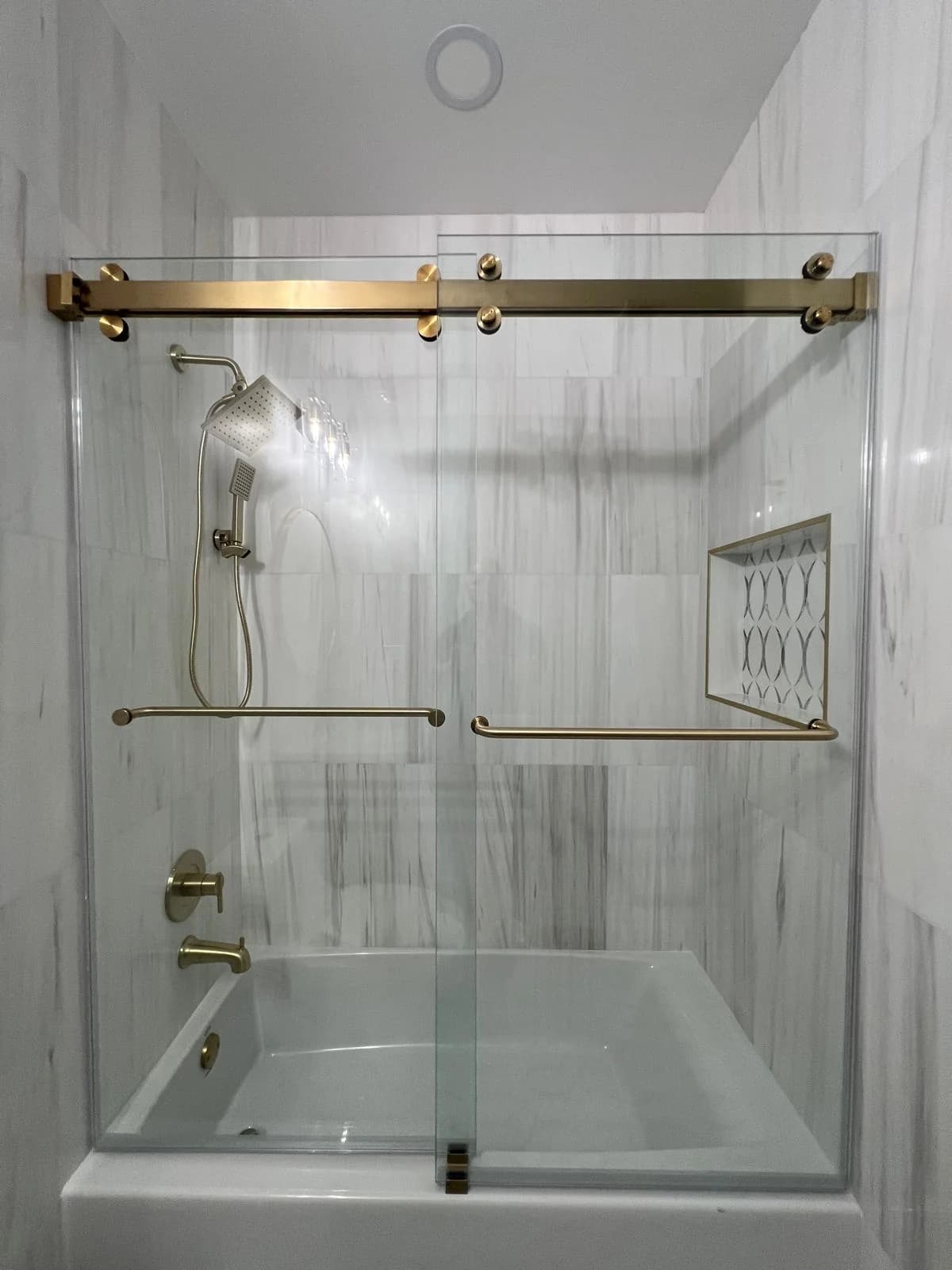
How to Clean Frameless Glass Shower Doors (and Stop Hard Water Spots for Good)
The 15-second habit that prevents most water spots, a safe weekly routine, the products that quietly ruin hardware finishes, and when a glass coating pays off.
Key takeaways
- Hard water spots are a drying problem, not a cleaning problem: squeegee the glass after the last shower of the day and most spotting never forms.
- Weekly, use a pH-neutral cleaner and a microfiber cloth. Diluted white vinegar is fine on glass, but keep it off brass, bronze and matte black hardware.
- Never use abrasive powders, scouring pads, razor blades or acidic descalers (CLR, Lime-Away) on tempered glass or hardware — they scratch, etch and void most warranties.
- South Florida water comes from a limestone aquifer; Miami-Dade’s main plant uses lime treatment specifically to reduce hardness, and the minerals that remain are what leave spots.
- A professionally applied hydrophobic coating makes water sheet off and can carry a 10-year warranty on new glass — a worthwhile add-on when you order a new enclosure.
On this page
- 01Why glass shower doors get spotty in South Florida
- 02The daily habit: squeegee, then walk away
- 03Weekly: a five-minute clean that is safe for glass and hardware
- 04Care by hardware finish
- 05Products that damage tempered glass and hardware
- 06Removing heavy buildup that is already there
- 07Monthly: a 30-minute inspection that prevents leaks
- 08Are protective glass coatings worth it?
- 09A note on glass type
- 10Frequently asked questions
A frameless shower looks incredible on day one. Six months later, many homeowners are staring at a cloudy film of mineral spots and wondering what went wrong. The good news: keeping glass clear is mostly about a few small habits, not scrubbing. This guide gives you the routine we recommend to every Eastern Glass customer, explains why South Florida water is harder on glass than most places, and tells you exactly which products to keep away from your enclosure.
15 sec
Daily squeegee that prevents most spotting
3–5 yrs
Typical life of seals and sweeps before replacement
10 yrs
Warranty on some factory-applied glass coatings
Why glass shower doors get spotty in South Florida
When water dries on glass, it leaves behind the dissolved minerals it was carrying — mainly calcium and magnesium. Each drop leaves a tiny ring; thousands of rings become the white haze you see. Soap scum then clings to those rough mineral deposits, which is why neglected glass gets worse quickly.
Our tap water makes this worse. Miami-Dade, Broward and Palm Beach draw drinking water from the Biscayne Aquifer, a shallow limestone formation. Limestone is calcium carbonate, so the raw water is naturally hard. Miami-Dade’s Water and Sewer Department notes in its 2024 Water Quality Report that water from the Alexander Orr, Jr. plant “receives lime treatment to reduce hardness” before it is sent to homes. Treatment helps, but enough minerals remain to spot glass, and homes on private wells usually see even more.
How hard is “hard”?
The U.S. Geological Survey classifies water above 120 mg/L of calcium carbonate as hard and above 180 mg/L as very hard. Much of South Florida’s groundwater falls in those ranges before treatment, which is why a water softener or a glass coating makes a visible difference here.
The daily habit: squeegee, then walk away
Everything else in this article is optional. This step is not. After the last shower of the day, run a rubber squeegee down the inside of the glass in three overlapping top-to-bottom strokes. It takes about 15 seconds and removes the water before it can dry and leave minerals behind.
- Keep the squeegee inside the shower on a suction hook so it actually gets used.
- If you prefer, a microfiber towel works too — the goal is simply dry glass.
- Leave the door slightly open for 20–30 minutes so humidity escapes and seals dry.
- A bathroom exhaust fan run for 15 minutes after showering also reduces mildew on silicone and seals.
Weekly: a five-minute clean that is safe for glass and hardware
- 1Spray a pH-neutral shower cleaner on the glass. Wait about 30 seconds so it can loosen soap film.
- 2Wipe with a clean microfiber cloth. A dirty cloth can drag grit across the surface and leave fine scratches — Guardian Glass warns about exactly this in its care guide.
- 3For light mineral residue, use diluted white vinegar (one part vinegar to one part water) on the glass only. Let it sit 5–10 minutes, then rinse.
- 4Rinse with clean water and squeegee so no cleaner dries on the surface.
- 5Dry the hardware with a separate cloth. Hinges, handles and clamps should never sit wet with cleaner on them.
Care by hardware finish
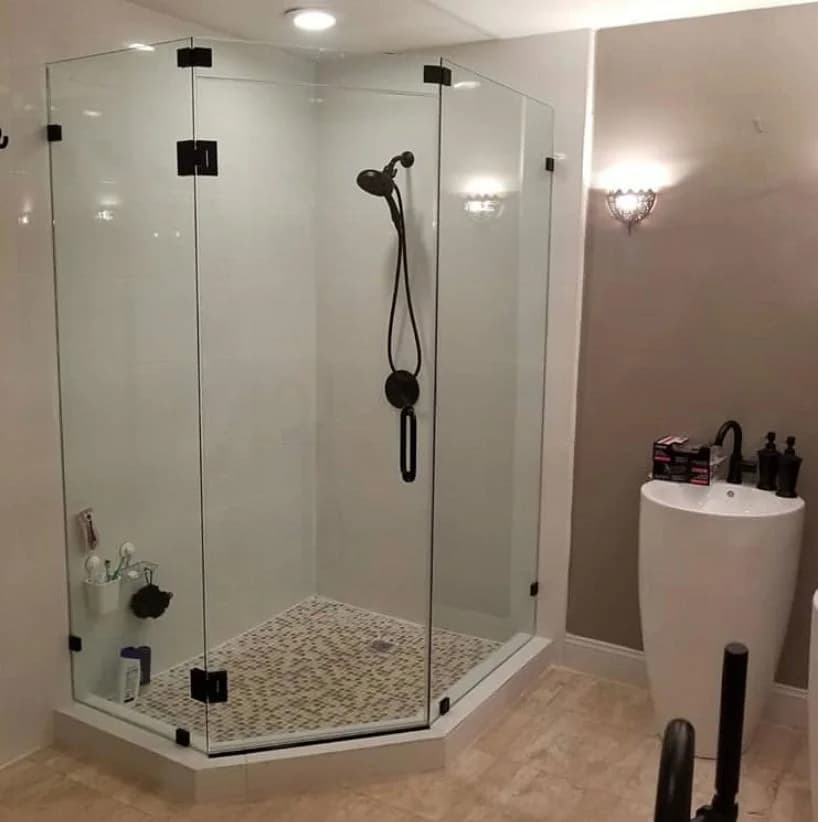
Most “ruined” shower doors we are called to look at have perfect glass and damaged hardware. Finishes react very differently to cleaners, so match the product to the metal.
| Finish | Safe routine | Avoid |
|---|---|---|
| Polished chrome | pH-neutral cleaner or ammonia-free glass cleaner, microfiber | Abrasive pads, acidic descalers |
| Brushed nickel | pH-neutral cleaner, microfiber, plain water | Ammonia glass cleaners, abrasives |
| Matte black | Warm water and microfiber; gentle pH-neutral cleaner if needed | Vinegar, Magic Eraser, anything abrasive — this is the most fragile finish |
| Brushed gold / brass | Plain water and microfiber; occasional pH-neutral cleaner | Vinegar and acids; note that living-finish brass develops a patina by design |
| Oil-rubbed bronze | Plain water and microfiber only | All chemical cleaners |
Products that damage tempered glass and hardware
Tempered glass is strong, but its surface is still glass — and the coatings on hardware are only microns thick. These are the products behind most warranty claims we see denied:
- Abrasive powders such as Ajax or Comet powder, and polishing compounds like cerium oxide or rouge — they leave permanent micro-scratches that trap minerals.
- Scouring pads, steel wool and razor blades. Even “non-scratch” pads can mark coated glass.
- Acidic descalers (CLR, Lime-Away) and products containing hydrofluoric or phosphoric acid. They etch glass and strip plating from hardware.
- Ammonia glass cleaners on hardware. Fine on bare glass, harsh on brushed and matte finishes.
- Bleach on vinyl seals and sweeps — it makes them brittle and chalky years early.
- Steam cleaners on seals. Heat softens the vinyl so it no longer seats flat against the glass.
Check the warranty before you try a “miracle” product
Most shower door warranties exclude damage from acidic cleaners, abrasives and pool chemicals. If a cleaner promises to dissolve years of buildup in seconds, assume it is acidic enough to harm your hardware.
Removing heavy buildup that is already there
If the glass already has a thick white haze, work in stages rather than reaching for something aggressive:
- 1Soak the area with a 1:1 white vinegar and water solution for 10–15 minutes (cover the hardware with a towel first).
- 2Make a paste of baking soda and water and rub gently with a microfiber cloth. Baking soda is mild enough for glass when used lightly.
- 3Rinse thoroughly and squeegee. Repeat once or twice over a few days instead of scrubbing harder.
- 4If haze remains after that, the minerals have likely etched into the surface. A professional glass polish or, in bad cases, replacing the panel is the only fix — and a strong argument for a coating on the new glass.
Monthly: a 30-minute inspection that prevents leaks
Once a month, check these
- Lift the bottom sweep and clean the threshold under it — this is where mildew hides.
- Confirm the vertical seal sits flat against the glass when the door is closed.
- Look for water stains or drips below the hinges after a shower.
- Wipe hinge bodies with a damp cloth instead of spraying cleaner directly on them.
- Inspect the silicone bead around wall clamps and the base. If it has lifted, call a professional — hinge hardware is load-bearing and should not be re-sealed casually.
Seals and sweeps are wear items. Plan to replace them every 3 to 5 years, sooner if they crack, turn hard or chalky, or let water through at the bottom. When buying replacements, match the channel profile and the glass thickness (usually 3/8" on frameless doors).
Are protective glass coatings worth it?
Hydrophobic coatings fill the microscopic pores in glass so water beads and runs off instead of clinging and drying in place. There are two kinds:
DIY spray-on treatments
- Applied at home after cleaning the glass thoroughly
- Typically last months to a few years before re-application
- Inexpensive, but results depend on surface prep
- Good option for an existing enclosure
Factory or professionally applied coatings
- Applied to new glass before installation, or by a trained applicator
- Products such as EnduroShield carry a 10-year warranty on new glass
- Glass like Guardian ShowerGuard builds the protection into the surface with a limited lifetime warranty
- Cuts cleaning time dramatically — ask for it when you order your enclosure
Our advice for South Florida homes
If you are installing a new frameless enclosure, add the coating. It costs a small fraction of the project and is the single biggest reason some of our customers’ showers still look new after five years. A whole-house water softener is the other option — it also protects fixtures and water heaters.
A note on glass type
Standard clear glass has a faint green tint from its iron content; low-iron (ultra-clear) glass removes it. Spots are equally visible on both, but low-iron glass shows the true color of your tile and makes a clean enclosure look even cleaner. If you are comparing enclosure options, our guide to frameless vs. semi-frameless shower doors covers glass choices in more detail.
Frequently asked questions
Ammonia-based glass cleaners are generally fine on bare glass, but keep them off brushed nickel, matte black, brass and bronze hardware, where ammonia can dull or discolor the finish. A pH-neutral cleaner is the safer choice for the whole enclosure. If your glass has a protective coating, follow the coating manufacturer’s instructions.
Sources & references
- [1]How to Clean a Frameless Hinged Shower Door Without Damaging Hardware — Dulles Glass
- [2]ShowerGuard Care and Cleaning — Guardian Glass
- [3]ShowerGuard Limited Lifetime Warranty — Guardian Glass
- [4]2024 Water Quality Report — Miami-Dade Water and Sewer Department
- [5]Hardness of Water — U.S. Geological Survey
- [6]EnduroShield Glass Coating (10-year warranty on new glass) — Architecture & Design
- [7]4 Practical Tips for Preventing Spots on Your Glass Shower Door — DreamLine
Want a shower that stays clear with less effort?
We install frameless enclosures with optional protective coatings and low-iron glass, and we replace worn seals, sweeps and hardware on existing doors across Miami-Dade, Broward and Palm Beach.
- Protective glass coatings available
- Seal & sweep replacement
- Free in-home measurement
Free estimates · We respond within 24 hours
Keep reading
All articles →
Shower Door Glass Options: Clear vs. Low-Iron vs. Frosted vs. Fluted (and What Florida Code Requires)
Privacy, light, cleaning and cost for every shower glass type, the one upgrade that makes white bathrooms pop, and the Florida safety-glazing rule your enclosure must follow.
Read article
Sliding vs. Hinged Shower Doors: Which One Is Right for Your Bathroom?
The honest comparison: which door fits a small bathroom, which is easier to clean, which leaks less, what each costs, and the code rule most people have never heard of.
Read article
Frameless Shower Door Cost in Miami (2026): What You’ll Actually Pay
Real 2026 price ranges for framed, semi-frameless and frameless shower doors — plus the 7 factors that move your quote up or down in South Florida.
Read article