
Sliding vs. Hinged Shower Doors: Which One Is Right for Your Bathroom?
The honest comparison: which door fits a small bathroom, which is easier to clean, which leaks less, what each costs, and the code rule most people have never heard of.
Key takeaways
- Sliding (bypass) doors need no swing clearance, which makes them the default for narrow bathrooms and tub-shower combos.
- Hinged doors give a wider, step-through opening and have no track to clean, but need roughly 30 inches of clear space in front to swing.
- The residential code adopted in Florida requires hinged shower doors to open outward and the access opening to be at least 22 inches clear.
- Neither type is “leak-proof”: leaks come from worn sweeps, out-of-plumb walls and poor sealing, not from the door style itself.
- Sliding doors usually have fewer leak points on tubs; hinged doors are easier to keep spotless in a walk-in shower.
On this page
After the glass type, the biggest decision in a shower project is how the door moves. Sliding and hinged doors each do some things better, and the right answer depends on your floor plan, who uses the bathroom, and how much cleaning you want to do. Here is how we walk customers through the choice during a site visit.
~30"
Clear space a hinged door typically needs to swing
22"
Minimum clear access opening required by code
0"
Swing clearance a sliding door needs
How each door type works
Sliding (bypass) doors
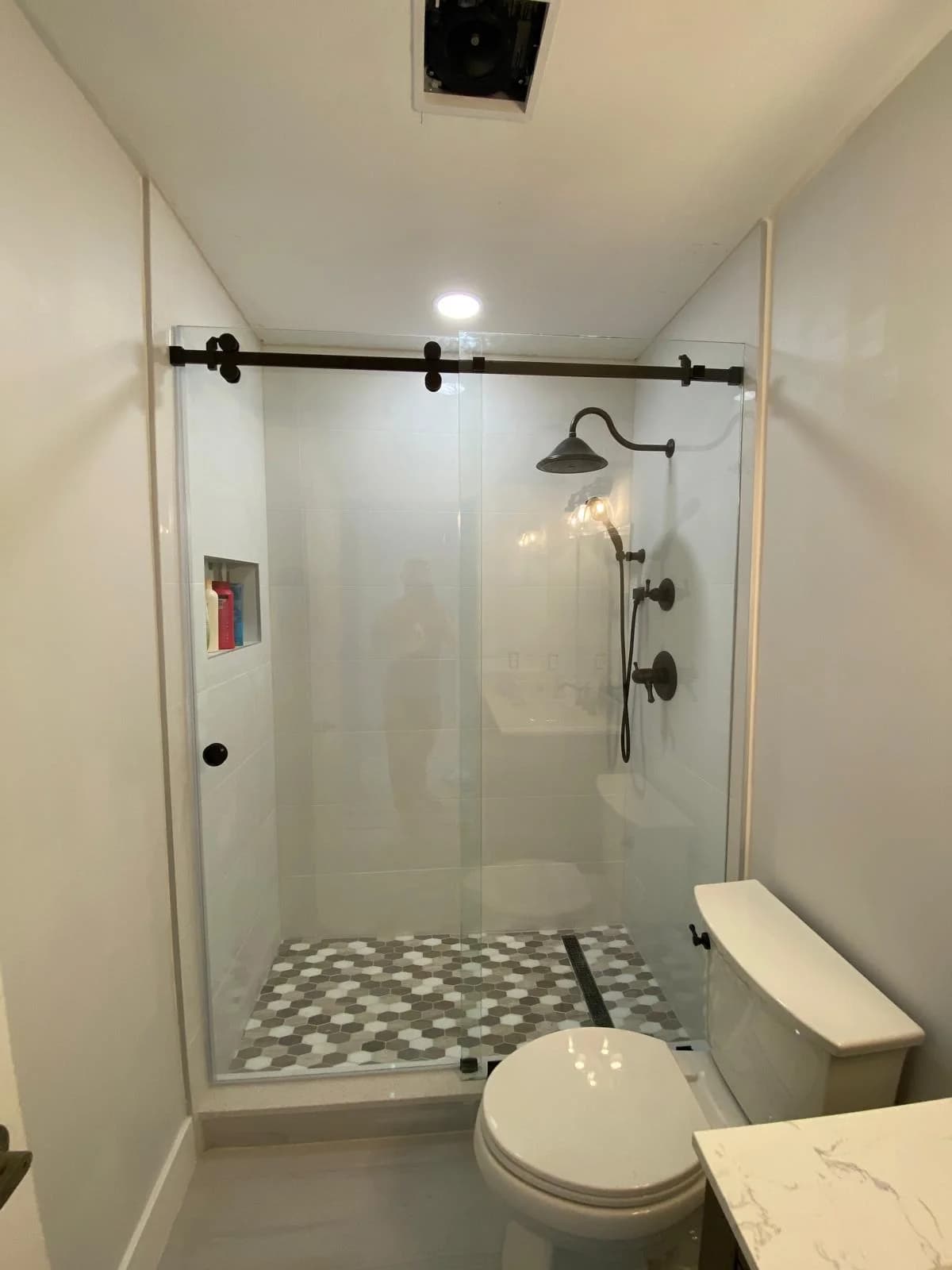
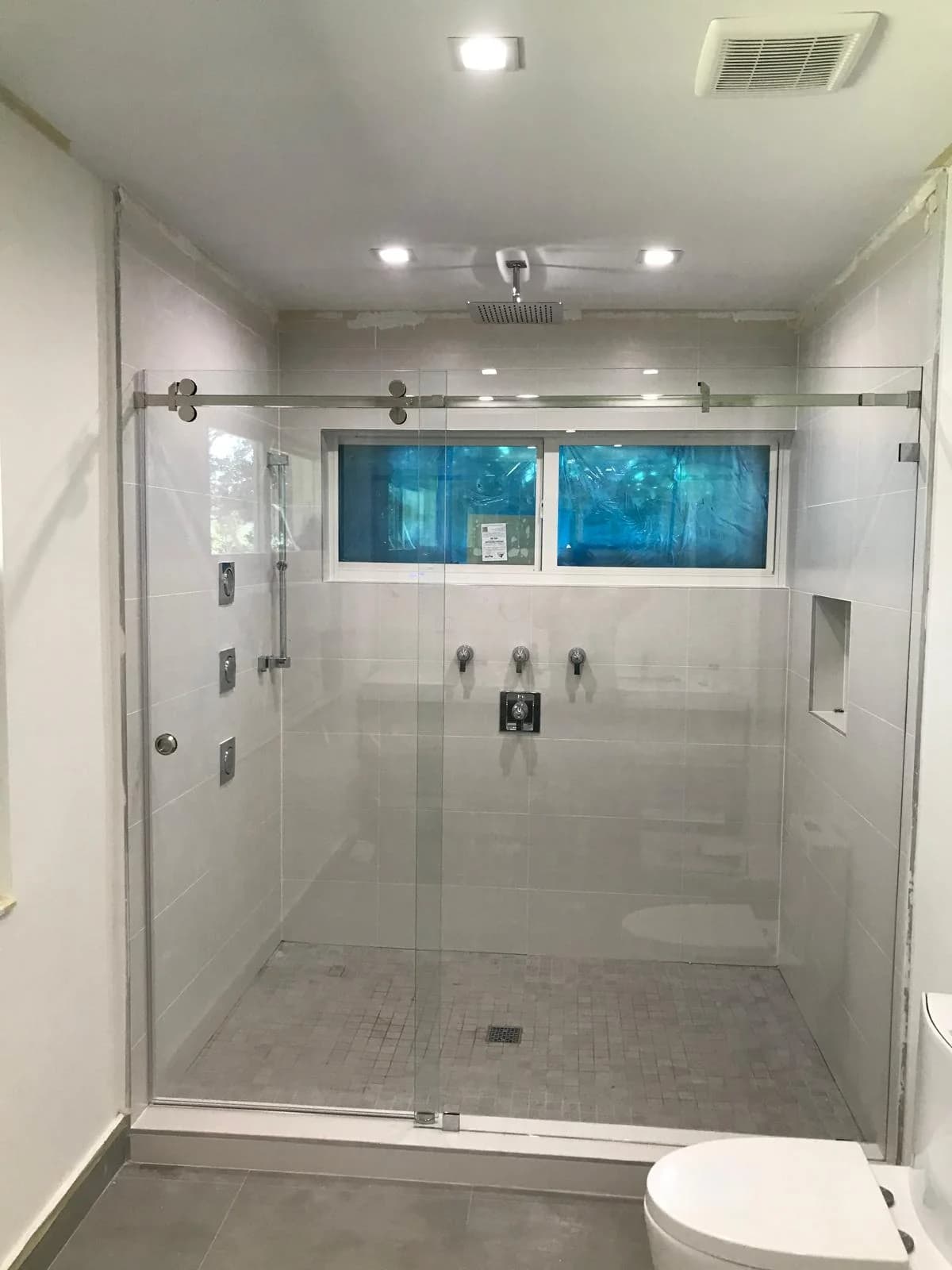
- Two or more panels glide on a header track or exposed rollers
- No swing clearance — ideal for tubs and tight bathrooms
- Opening is roughly half the enclosure width
- Frameless “barn-style” versions use a single exposed top bar
Hinged (swing) doors
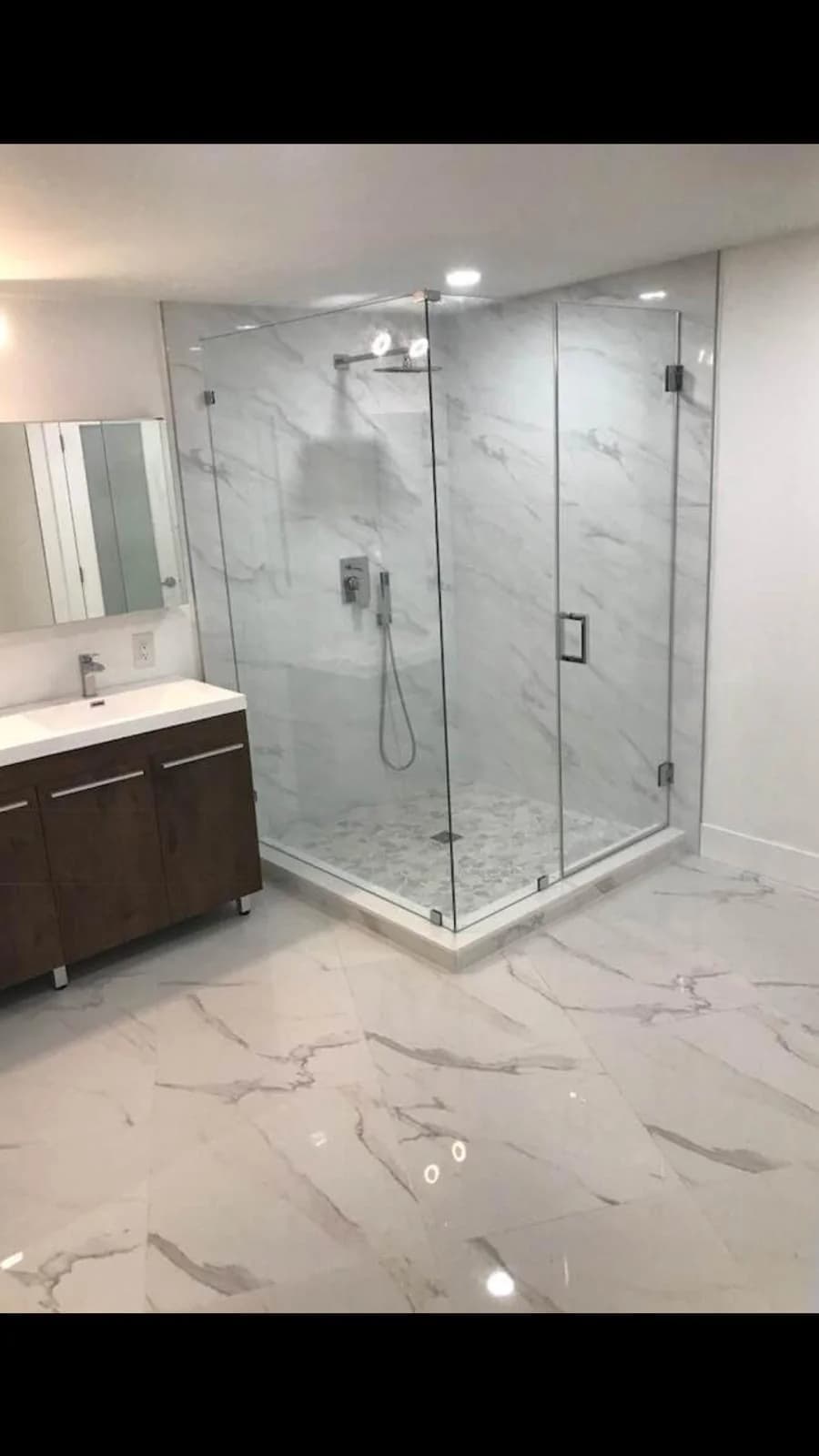
- A single door panel on wall-mounted or glass-to-glass hinges
- Opens the full width of the door for easy step-in
- No track or rollers to clean
- The classic look of a frameless walk-in shower
Space: the first question to answer
Measure the clear floor space in front of the shower opening. Installers generally look for about 30 inches of clearance for a hinged door to swing fully without hitting a toilet, vanity or wall. If you do not have it, a sliding door solves the problem instantly. If the shower is a 60-inch alcove or a tub, sliding is almost always the natural fit; for a 36-inch or smaller doorway into a walk-in shower, a hinged door is the standard choice.
The code rule most homeowners have never heard of
Section P2708.1 of the International Residential Code, which Florida’s residential code is based on, states that “hinged shower doors shall open outward,” and the access opening must have a clear width of at least 22 inches. The reason is safety: if someone falls inside the shower, a door that only swings inward can be blocked by their body. Many frameless hinges are dual-action, so the door can swing out and also in for rinsing — that satisfies the rule, as long as it opens outward.
Opening width and accessibility
A hinged door opens to the full width of the panel, which is why it is the better choice for anyone with mobility concerns, for carrying a child in, or simply for a roomy feel. A bypass door only ever opens about half of the enclosure width, and the fixed panel can be awkward if the shower valve ends up behind it. If you are choosing sliding, make sure the opening lines up with the controls so you can turn the water on without getting wet.
Cleaning and maintenance
| Sliding door | Hinged door | |
|---|---|---|
| Tracks or rollers | Yes — bottom guides and rollers collect soap and grime | None |
| Hardware to maintain | Rollers, guides, header or bar | Hinges, handle, wall clamps |
| Overlapping glass | Yes — the panels overlap, so there is a strip that is harder to squeegee | No — every surface is reachable |
| Seals and sweeps | Bottom guide and bumpers | Vertical seal and bottom sweep (replace every 3–5 years) |
| Overall effort | Slightly more | Slightly less |
Whichever you choose, the same daily habit keeps either one looking new — see our guide on how to clean frameless glass shower doors.
Which one leaks less?
Neither style is inherently watertight — a frameless enclosure is designed to control water, not seal it like a submarine hatch. In practice:
- Sliding doors on tubs have fewer leak points because the panels overlap and the water hits a fixed panel most of the time.
- Hinged doors rely on a vertical seal at the hinge side, a strike seal on the handle side and a bottom sweep. If any of those wears out, water finds the gap.
- The most common cause of leaks on either type is out-of-plumb walls or an out-of-level curb, which leaves an uneven gap that seals cannot close. A professional measurement after the tile is finished catches this before the glass is ordered.
- Directing the showerhead away from the door and installing the door on the opposite side from the spray solves most “leaks” that are really splashing.
Cost: sliding vs. hinged
There is no universal winner on price. A framed sliding tub door is one of the least expensive enclosures you can buy, while a frameless sliding system with a heavy header or exposed rollers uses more glass and premium hardware than a single hinged door on a small opening. Our Miami shower door cost guide breaks down 2026 price ranges by configuration; the short version is that total glass area and hardware drive the number more than the door style.
| Configuration | Typical glass | Price position |
|---|---|---|
| Framed sliding tub door | 1/4" tempered, aluminum frame | Lowest |
| Frameless hinged door on alcove (≤36") | 3/8" tempered, 2 hinges | Low to mid |
| Frameless hinged door + fixed panel | 3/8" tempered, clamps | Mid |
| Frameless sliding (barn-style) on 60" opening | 3/8" tempered, exposed rollers | Mid to high |
| Full enclosure with return panels, any door | 3/8" or 1/2" tempered | Highest |
Pivot, bi-fold and doorless: the other options
- Pivot doors rotate on pins at the top and bottom instead of wall hinges. They allow a heavier, wider panel and a very clean look, and most pivot systems swing both ways.
- Bi-fold doors fold in half, so they need about half the clearance of a hinged door. Useful for very tight spaces, but there is more hardware to maintain.
- Fixed panel / doorless walk-in. A single splash panel with no door at all — nothing to clean, nothing to leak, but it requires a longer shower so water stays inside.
- Steam showers need a hinged or pivot door with a transom and full seals, since the enclosure has to hold steam.
A quick decision guide
Choose a sliding door if…
- The shower is on a tub or a 48–72" alcove
- There is less than about 30" of clear floor in front of the opening
- A toilet or vanity sits right outside the shower
- You want the lowest number of moving parts for a rental or guest bath
Choose a hinged door if…
- The opening is 36" or narrower, or it is a walk-in shower
- Someone in the home has mobility needs or you simply want a wide entry
- You want the easiest glass to keep spotless
- You like the classic frameless look with minimal hardware
What we do on a site visit
We measure the opening, the clearance in front of it, where the showerhead points and how plumb the walls are. Then we recommend a door style and show you hardware finishes in person. The measurement is free, and it is the only way to know which option will actually work in your bathroom.
Frequently asked questions
A hinged shower door may swing inward only if it also opens outward. The residential code requires hinged shower doors to open outward so a person who falls inside cannot block the exit. Dual-action frameless hinges meet this requirement because they swing both ways.
Sources & references
- [1]2018 International Residential Code – Section P2708.1 Shower Compartments — International Code Council
- [2]Sliding Shower Door vs. Hinged: Which Is Right for Your Bathroom? — Glass Doctor
- [3]Sliding Glass Shower Doors vs. Hinged Doors — Dulles Glass
- [4]Sliding vs. Hinged Shower Door Buying Guide — Lowe’s
- [5]Shower Door Size Requirements — Building Code Trainer
Let us measure and recommend the right door for your bathroom
Our team installs frameless sliding, hinged and pivot enclosures across Miami-Dade, Broward and Palm Beach. We measure after your tile is done, so the glass fits your walls exactly.
- Sliding, hinged & pivot systems
- Chrome, nickel, matte black & gold hardware
- Installed in 1–2 days
Free estimates · We respond within 24 hours
Keep reading
All articles →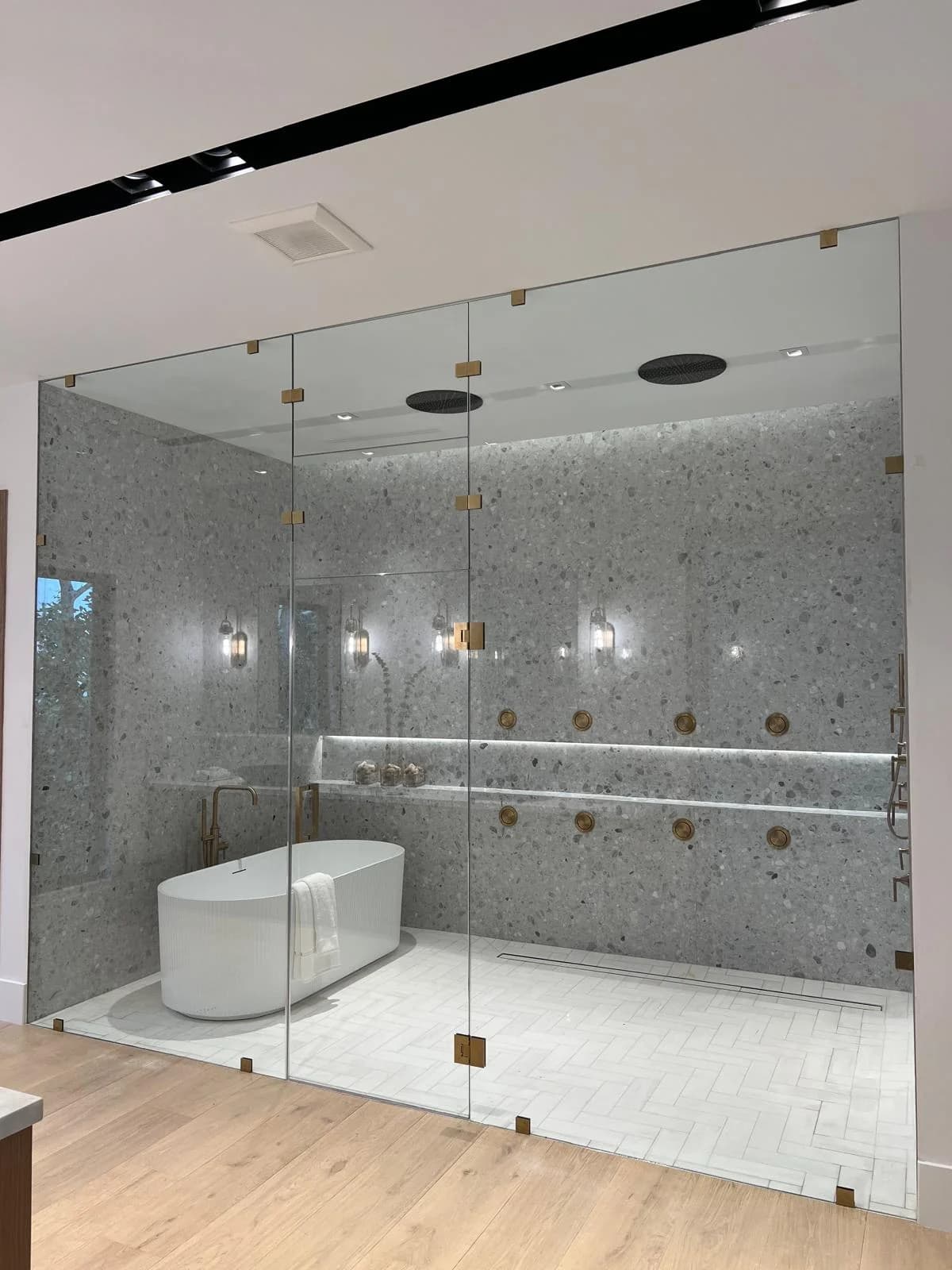
Shower Door Glass Options: Clear vs. Low-Iron vs. Frosted vs. Fluted (and What Florida Code Requires)
Privacy, light, cleaning and cost for every shower glass type, the one upgrade that makes white bathrooms pop, and the Florida safety-glazing rule your enclosure must follow.
Read article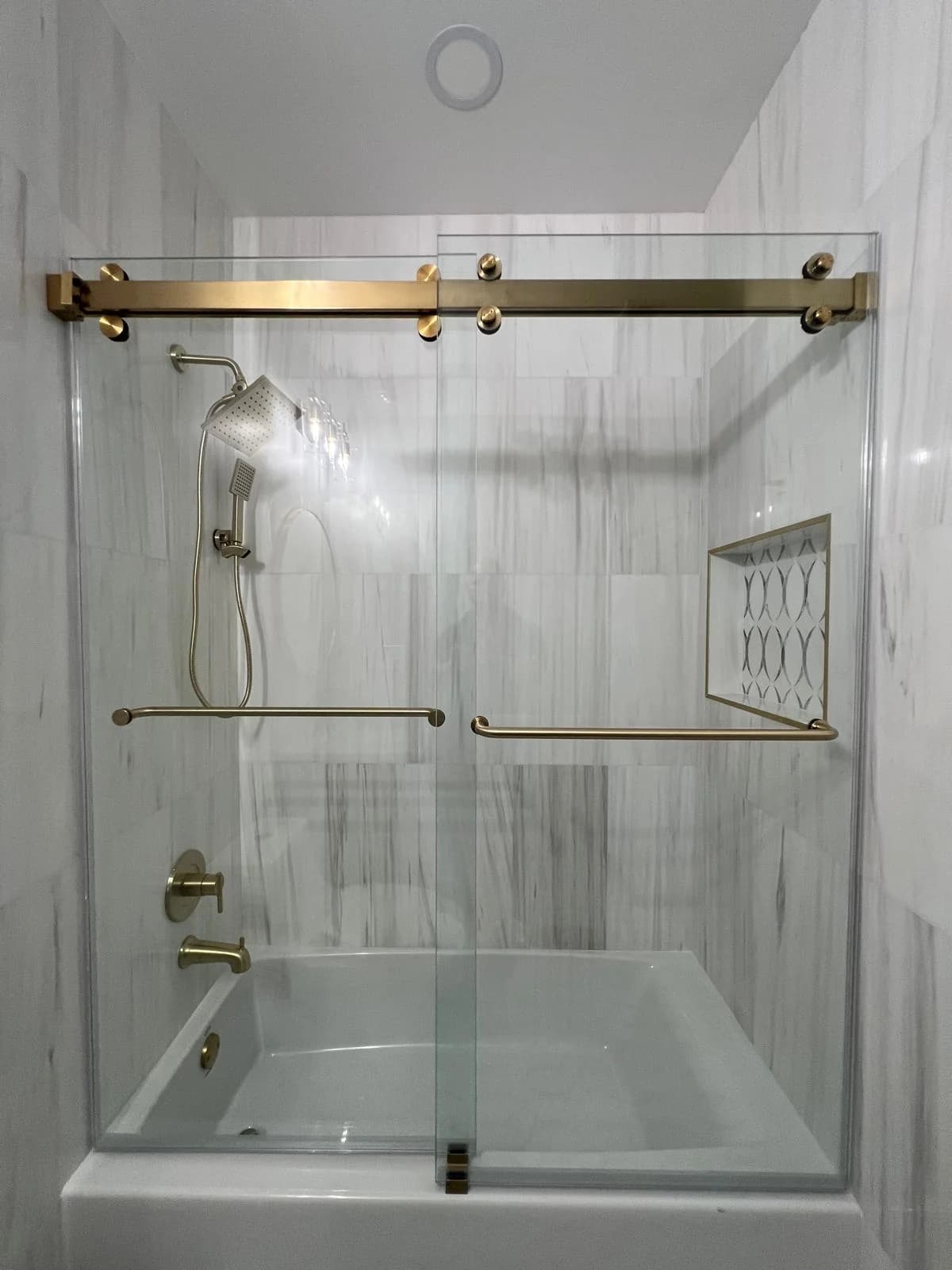
How to Clean Frameless Glass Shower Doors (and Stop Hard Water Spots for Good)
The 15-second habit that prevents most water spots, a safe weekly routine, the products that quietly ruin hardware finishes, and when a glass coating pays off.
Read article
Frameless Shower Door Cost in Miami (2026): What You’ll Actually Pay
Real 2026 price ranges for framed, semi-frameless and frameless shower doors — plus the 7 factors that move your quote up or down in South Florida.
Read article