
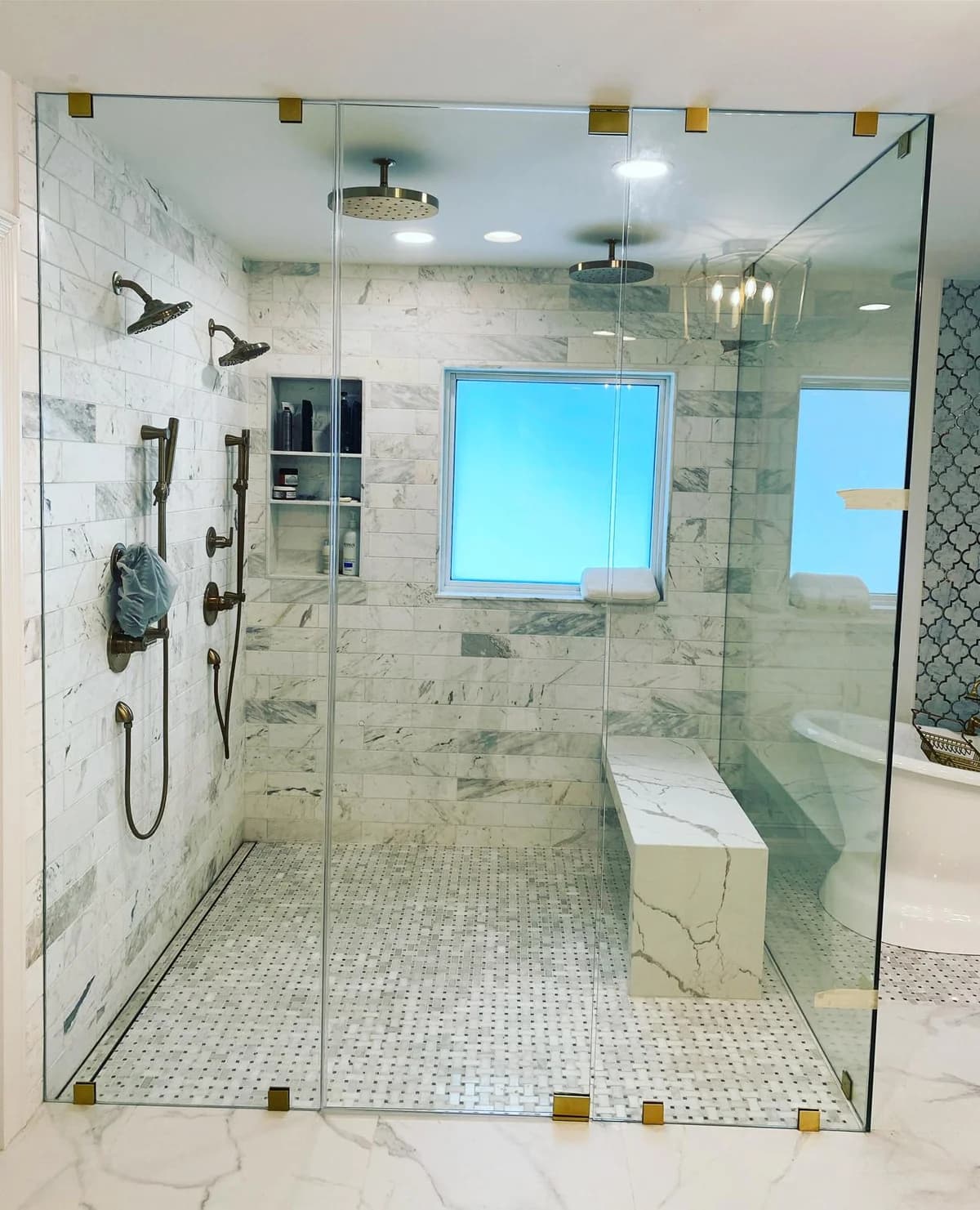
Frameless vs. Semi-Frameless Shower Doors: Which Is Right for Your Bathroom?
A side-by-side comparison of looks, glass thickness, weight, cleaning and cost — plus when 1/2" glass is actually worth it.
Key takeaways
- Frameless doors use 3/8" or 1/2" tempered glass with no perimeter frame; semi-frameless doors typically use 5/16" or 3/8" glass with partial framing.
- 3/8" glass is the industry standard for frameless showers — rigid enough for most bathrooms and lighter on hinges and walls.
- 1/2" glass weighs about one-third more than 3/8" glass, so it needs heavier hardware and solid wall backing.
- Semi-frameless usually costs less: roughly $500–$1,550 installed vs. $600–$1,900 for frameless (national HomeGuide ranges).
- Either way, the glass must be tempered safety glazing with a permanent identification mark.
On this page
Once you decide on a glass shower, the next question is almost always the same: frameless or semi-frameless? Both look far more modern than an old framed door, but they differ in glass thickness, hardware, cleaning and price. Here’s a clear, practical comparison to help you choose.
What’s the actual difference?
Frameless
- Thick 3/8" or 1/2" tempered glass
- No metal frame around the door or panels
- Held by hinges, clamps or U-channel
- Maximum openness and a high-end look
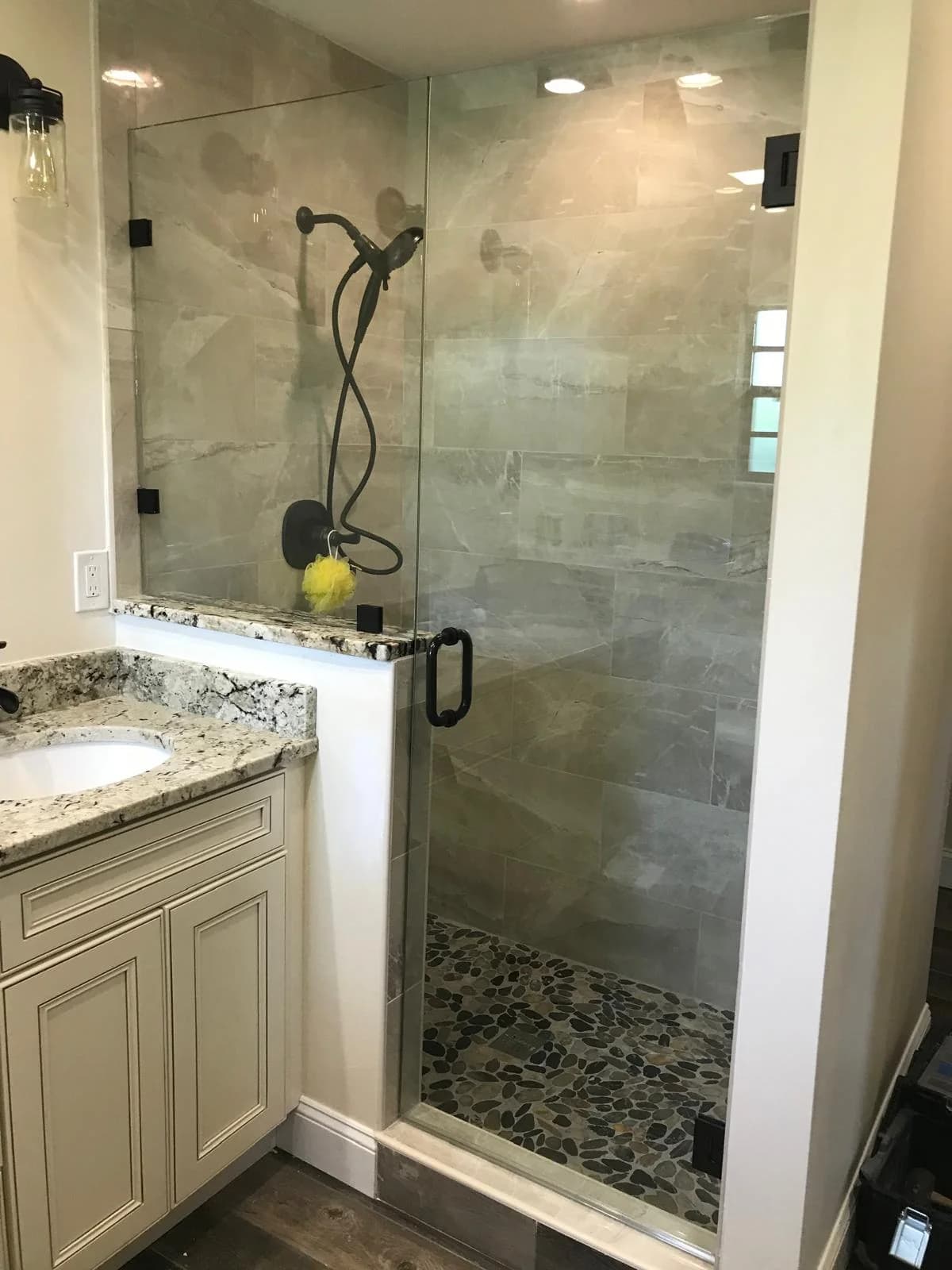
Semi-frameless
- Typically 5/16" or 3/8" tempered glass
- Partial framing — often around fixed panels or top and bottom
- Door panel is usually unframed or lightly framed
- Modern look at a lower price point
Side-by-side comparison
| Frameless | Semi-frameless | |
|---|---|---|
| Look | Seamless, minimal, “all glass” | Clean but with visible metal |
| Glass thickness | 3/8" (standard) or 1/2" | 5/16" or 3/8" |
| Typical installed cost* | $600 – $1,900+ | $500 – $1,550 |
| Cleaning | Easiest — few places for soap scum | Frame edges need attention |
| Water control | Relies on seals, sweeps and careful layout | Frame channels help contain water |
| Wall requirements | Solid anchoring for heavy hinges | More forgiving |
| Best for | Walk-ins, remodels, luxury baths | Budget-conscious modern updates |
3/8" vs. 1/2" glass: is thicker better?
Thicker glass feels more solid and looks more luxurious from the edge — but it’s also much heavier. Glass weighs roughly 4.9 lb per square foot at 3/8" and about 6.5 lb per square foot at 1/2". On a typical 28" × 76" door, that’s the difference between roughly 72 lb and 96 lb hanging on two hinges.
| Thickness | Approx. weight / sq ft | 28" × 76" door (approx.) | Typical use |
|---|---|---|---|
| 5/16" (8 mm) | ~4.1 lb | ~60 lb | Semi-frameless doors |
| 3/8" (10 mm) | ~4.9 lb | ~72 lb | Most frameless showers |
| 1/2" (12 mm) | ~6.5 lb | ~96 lb | Large or luxury frameless panels |
Our take
For most South Florida bathrooms, 3/8" glass is the sweet spot: rigid, beautiful and easier on hinges and walls. We recommend 1/2" mainly for very large fixed panels, tall enclosures, or when you specifically want that heavier, premium feel — and the walls can support it.
How to choose in 60 seconds
- Choose frameless if you want the most open, modern look, easier cleaning and your budget allows it.
- Choose semi-frameless if you want a modern update at a lower cost, or your walls are less suited to heavy hinged glass.
- Choose 1/2" glass for oversized panels, tall or steam enclosures, or a statement luxury bathroom.
- Choose low-iron glass if you have light tile or marble and don’t want the green tint visible on glass edges.
Don’t skip the safety basics
Whatever style you choose, building codes treat glass in shower and tub enclosures as a hazardous location. The glass must be tempered safety glazing, and each pane must carry a permanent mark identifying it as safety glass. A professional installer will also make sure hinges are anchored into solid backing — not just tile and drywall.
Curious about pricing in more detail? See our 2026 frameless shower door cost guide for Miami.
Frequently asked questions
A properly designed frameless enclosure uses clear seals, a door sweep and a small, consistent gap to keep water inside. Showerhead position and door placement also matter, so it’s worth planning the layout with your installer.
Sources & references
- [1]3/8” vs. 1/2” Shower Door Glass – What’s the Difference — Schicker Shower Doors
- [2]Frameless vs Semi-Frameless Shower Doors — American Glass & Glazing
- [3]How Much Does It Cost to Install a Shower Door? (2026) — HomeGuide
- [4]IRC R308.4.5 Glazing and wet surfaces — International Code Council
See both options in your own bathroom
Book a free consultation. We’ll measure, check your walls, and show you which style, glass thickness and hardware fit your space and budget.
- Honest, practical recommendation
- Clear written quote
- Fast 1–2 day installation
Free estimates · We respond within 24 hours
Keep reading
All articles →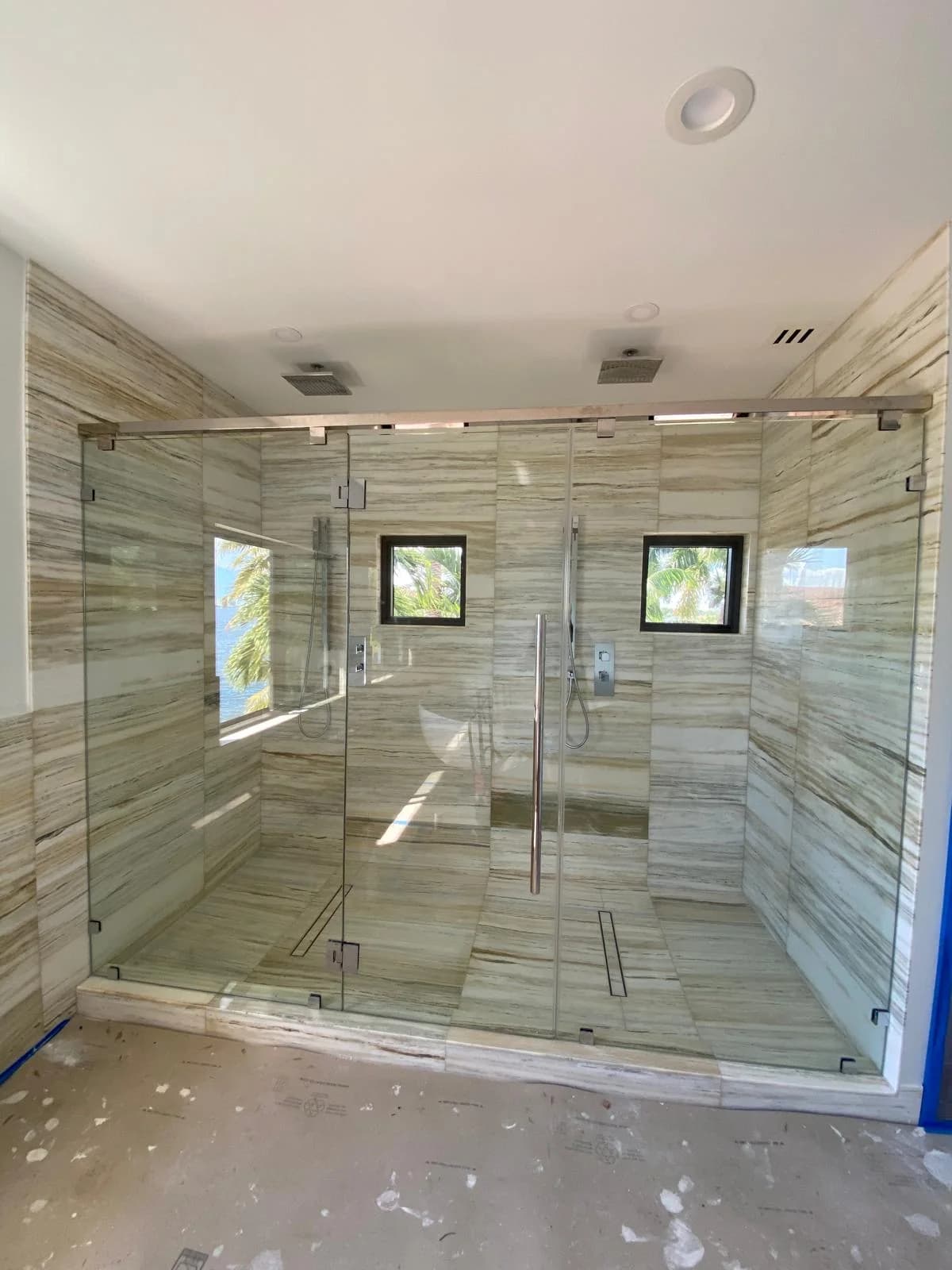
Frameless Shower Door Cost in Miami (2026): What You’ll Actually Pay
Real 2026 price ranges for framed, semi-frameless and frameless shower doors — plus the 7 factors that move your quote up or down in South Florida.
Read article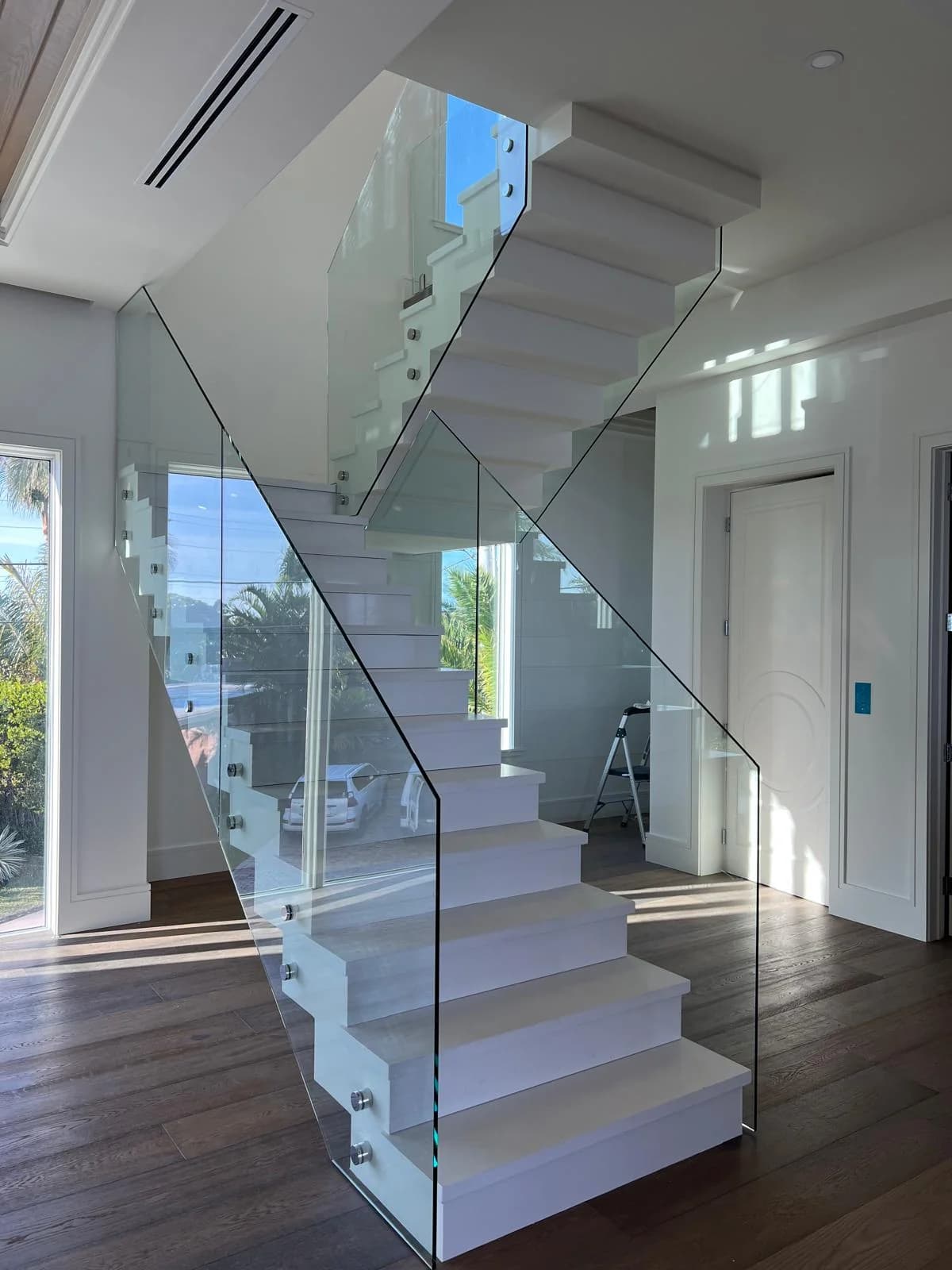
Glass Railings in Florida: Building Code Requirements Homeowners Should Know
Guard heights, the 4-inch rule, tempered vs. laminated glass, hurricane zones and permits — the Florida code essentials in plain English.
Read article
Glass Wine Cellars in South Florida: How to Keep Your Collection at 55°F
Ideal temperature and humidity, condensation in Florida’s climate, single vs. insulated glass, and how to keep light from damaging your wine.
Read article